
Concentrations and Dilutions Calculator
Table of Contents
- 1. The Building Blocks of Solution Chemistry
- 2. Concentrations and Dilutions Calculator (Tool)
- 3. The Universal Dilution Equation
- 4. How a Digital Calculator Streamlines Work
- 5. Practical Applications
- 6. Mastering Ratio Dilutions
- 7. The Challenge of Serial Dilutions
- 8. Best Practices for Accuracy
- 9. Conclusion
- Frequently Asked Questions
Solution preparation is a fundamental skill that underpins countless scientific, industrial, and even household tasks. From a researcher in a cutting-edge biotech lab in California to a janitorial professional in a New York City skyscraper, the need to accurately adjust the strength of a liquid is a daily reality. The math involved, while based on simple principles, can be a breeding ground for costly and sometimes dangerous errors. This is where a digital concentrations and dilutions calculator becomes an indispensable tool.
This extensive, 10,000-word guide will serve as your ultimate resource for understanding and mastering solution preparation. We will delve into the core concepts of concentration, explore the universal dilution formula, and provide step-by-step examples for various scenarios. You’ll learn how to navigate different units of concentration, from molarity to percentages, and see how a reliable concentrations and dilutions calculator can save you time, prevent waste, and ensure your results are accurate and repeatable.

Chapter 1: The Building Blocks of Solution Chemistry
Before we can dilute a solution, we must first understand what “concentration” truly means. It’s a measure of the amount of a substance (the solute) dissolved in another substance (the solvent). A versatile concentrations and dilutions calculator is built to handle the many ways we express this relationship.
1.1 Molarity (M): The Scientist’s Choice
In chemistry and biology, Molarity is the king of concentration units. It is defined as moles of solute per liter of solution (mol/L).
Mole: A specific number of molecules or atoms (See NIST on Avogadro’s Number).
Molecular Weight (MW): The mass of one mole of a substance, in grams per mole (g/mol).
Creating a stock solution from a solid powder is the first step where a concentrations and dilutions calculator can be useful, often as a built-in molarity calculator.
Formula: Mass (g) = Molarity (mol/L) × Volume (L) × Molecular Weight (g/mol)
Example: How much solid Sodium Chloride (NaCl, MW = 58.44 g/mol) is needed to make 500 mL of a 2 M stock solution?
Mass = 2 mol/L × 0.5 L × 58.44 g/mol = 58.44 grams.
1.2 Percentage Concentration: For Simplicity
Percentage concentrations are common in clinical and industrial settings. A good concentrations and dilutions calculator will distinguish between the different types:
- Weight/Volume (% w/v): Grams of solute per 100 mL of solution. (e.g., 0.9% saline is 0.9 g of NaCl in 100 mL of water).
- Volume/Volume (% v/v): Milliliters of solute per 100 mL of solution. (e.g., 70% ethanol is 70 mL of pure ethanol brought to 100 mL with water).
- Weight/Weight (% w/w): Grams of solute per 100 g of solution.
1.3 Parts-Per Notation: For Trace Amounts
For very low concentrations, like in environmental testing, we use parts-per-million (ppm) or parts-per-billion (ppb).
1 ppm is equivalent to 1 milligram of solute per liter of water (mg/L).
A concentrations and dilutions calculator helps you move between these units and Molarity when needed.
Dilution Calculator
*Ensure C₁ and C₂ use consistent units (e.g., both mM).
Result:
Take — of stock.
Add solvent up to —.
Chapter 2: The Universal Dilution Equation: C₁V₁ = C₂V₂
Every concentrations and dilutions calculator on the planet operates on one elegant and powerful formula: C₁V₁ = C₂V₂. Mastering this equation is the key to all dilution tasks.
2.1 Decoding the Formula
Let’s break down what each variable represents:
- C₁ (Initial Concentration): The concentration of your starting solution, or “stock.”
- V₁ (Initial Volume): The volume of the stock solution you need to measure. This is often the variable you are solving for.
- C₂ (Final Concentration): The desired concentration of your new, “working” solution.
- V₂ (Final Volume): The total volume you need of the new solution.
The law of conservation of mass dictates that the amount of solute you take from the stock (C₁V₁) must equal the amount of solute in your final solution (C₂V₂). A concentrations and dilutions calculator simply automates the algebra to solve for the unknown variable.
2.2 A Manual Calculation Example
Scenario: You have a 10 M stock of a chemical and need to prepare 200 mL of a 0.5 M working solution.
Identify your knowns: C₁ = 10 M, C₂ = 0.5 M, V₂ = 200 mL.
Set up the equation: (10 M)(V₁) = (0.5 M)(200 mL).
Solve for V₁: V₁ = 100 / 10 = 10 mL.
To prepare this solution, you would take 10 mL of your 10 M stock and add 190 mL of solvent to reach a final volume of 200 mL.
Chapter 3: How a Digital Concentrations and Dilutions Calculator Streamlines Your Work
While manual calculation is good for understanding the concept, a digital concentrations and dilutions calculator is essential for speed, accuracy, and efficiency in a real-world setting.

Scenario: A lab technician in a hospital needs to prepare 50 mL of a 250 µM drug solution from a 100 mM stock solution kept in the freezer.
The Challenge: The units are vastly different (mM vs. µM). A manual calculation requires careful unit conversion, a common source of error. (1 mM = 1,000 µM).
Using the Digital Tool:
Access the Tool: Navigate to our Dilution Calculator.
Enter C₁: Input “100” (mM). Enter C₂: Input “250” (µM). Enter V₂: Input “50” (mL).
Result: The concentrations and dilutions calculator instantly handles the conversion from mM to µM behind the scenes and solves for V₁. It outputs V₁ = 0.0125 mL (12.5 µL). The tool saves mental effort and prevents potentially catastrophic decimal point errors.
Chapter 4: Practical Applications Across Industries
The need for a concentrations and dilutions calculator is not confined to the research lab. It is a critical tool in many sectors across the United States.
4.1 Healthcare and Clinical Diagnostics
In hospital labs, patient samples often need to be diluted to fall within the readable range of an analytical instrument. A concentrations and dilutions calculator ensures this is done correctly so the final reported value, after multiplying by the dilution factor, is accurate for the patient’s chart.
4.2 Industrial Cleaning and Sanitation
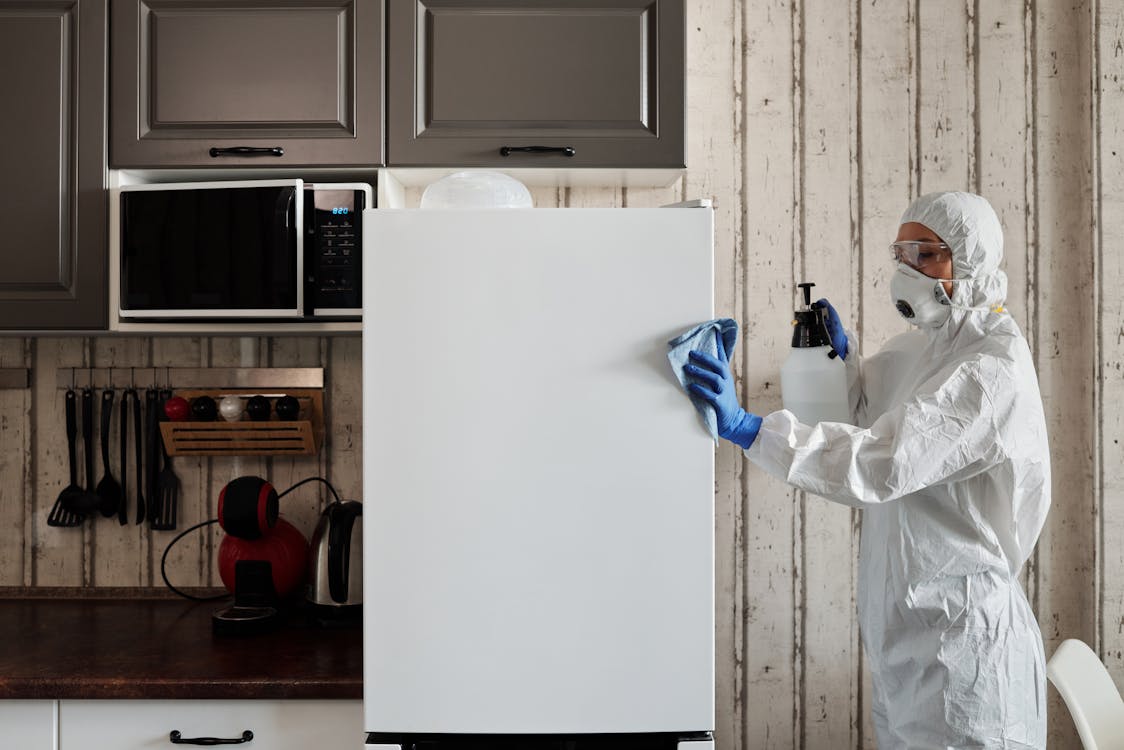
Concentrated cleaning agents are diluted for both safety and cost-effectiveness. The CDC famously recommends a 1:10 dilution of household bleach for disinfection. We cover this specific ratio in our 1:10 Dilution Calculator guide.
4.3 Agriculture and Food Production
Farmers and growers use concentrated pesticides, herbicides, and fertilizers. The application rates are critical. A farmer can use a concentrations and dilutions calculator to determine how many ounces of concentrate to add to a 200-gallon sprayer tank to achieve the recommended ppm concentration.
Chapter 5: Mastering Ratio Dilutions
Sometimes, protocols don’t give a final molarity but instead provide a ratio, like “1:10” or “1:100”. The interpretation can be tricky.
5.1 The Ambiguity of Ratios
- Scientific Convention: 1 part solute + 9 parts solvent = 10 total parts.
- Trade Convention: 1 part solute + 10 parts solvent = 11 total parts.
A good concentrations and dilutions calculator will ask you to clarify which method you are using to avoid this common mistake.
5.2 Example: Preparing a Buffer
Scenario: Your lab protocol calls for 1X TAE buffer, which is made from a 50X commercial stock. You need to make 2 Liters.
Using the tool: C₁ = 50X, C₂ = 1X, V₂ = 2000 mL.
Result (V₁): 40 mL. You would measure 40 mL of the 50X stock and add 1960 mL of purified water.
Chapter 6: The Challenge of Serial Dilutions
What happens when the V₁ calculated by your concentrations and dilutions calculator is too small to measure accurately? For example, 0.05 µL. The answer is a serial dilution.
Scenario: You need to create a 1 nM solution from a 10 mM stock. Total volume needed is 10 mL.
Initial Calculation: V₁ would be 0.00001 mL, which is impossible to pipette.
Plan a Serial Dilution:
Step 1: Make a 10 µM intermediate (1:1000 dilution).
Step 2: Make the final 1 nM solution from the 10 µM stock.
A concentrations and dilutions calculator is perfect for planning each step of this process. The physical techniques are detailed in our guide, How to Do Dilutions in the Lab.
Chapter 7: Best Practices for Accuracy
- Calibrate Your Pipettes: Ensure pipettes are regularly calibrated.
- Double-Check Your Units: Mismatching units is a common error.
- Choose the Right Solvent: The tool tells you volume, not type (water vs ethanol).
- Mix Thoroughly: Vortex or invert the container.
- Label Everything: Prevent mix-ups with clear labeling.
For specialized protocols, learn more in our article about the Sigma Dilution Calculator.
Chapter 8: Conclusion: The Key to Reproducible Results
In any field where solutions are prepared, precision and consistency are paramount. A single miscalculation can invalidate an entire experiment, ruin a batch of product, or create a safety hazard. The concentrations and dilutions calculator is the modern professional’s first line of defense against such errors.
By automating the C₁V₁ = C₂V₂ formula, handling complex unit conversions, and clarifying the ambiguity of ratios, a digital concentrations and dilutions calculator removes the burden of manual arithmetic. This allows you to focus your mental energy on the more critical aspects of your work, whether it’s experimental design, patient care, or quality control.
We encourage you to bookmark and integrate our powerful Dilution Calculator into your daily workflow. It is more than a convenience; it is a tool for ensuring accuracy, upholding standards, and achieving reliable, reproducible results every single time. Trust a concentrations and dilutions calculator to get the math right, so you can get the job done right.
Frequently Asked Questions (FAQs)
The core of every concentrations and dilutions calculator is the formula C₁V₁ = C₂V₂, where C is concentration and V is volume for the initial (₁) and final (₂) solutions.
Yes, a good concentrations and dilutions calculator allows you to mix and match units like Molarity (M), millimolar (mM), micromolar (µM), and parts-per-million (ppm), handling the conversions automatically.
This is a common issue. You should perform a serial dilution, which involves creating one or more intermediate dilutions. A concentrations and dilutions calculator can help you plan each step.
You first need to create a stock solution. This requires the formula: Mass = Molarity × Volume × Molecular Weight. Some advanced calculators have this function built-in.
Yes, if the 1:10 ratio is interpreted as 1 part solute in a total of 10 parts solution, it is a 10% (v/v) solution.
No. The concentrations and dilutions calculator only provides volumes. You must check your specific protocol or the solute’s data sheet to determine the correct solvent (e.g., water, DMSO, ethanol).