
How to Calculate Dilutions: A Comprehensive Guide
Table of Contents
From a research laboratory in Boston to a cleaning service in Miami, the process of diluting a substance is a universal task. It involves taking a concentrated liquid, known as a stock solution, and adding a solvent to decrease its strength. While the concept is simple, the math behind it can be a significant hurdle. An error in calculation can lead to ineffective cleaning solutions, ruined scientific experiments, or even safety hazards. This guide will teach you how to calculate dilutions accurately and confidently, every single time.
This definitive resource will walk you through the core principles, formulas, and practical applications of dilution calculations. We will break down the essential C₁V₁ = C₂V₂ formula, explore different concentration units, and provide real-world scenarios from various fields. Understanding how to calculate dilutions is a fundamental skill, and by the end of this guide, you will be equipped to perform these calculations manually and know when to leverage a digital tool for maximum efficiency and accuracy.

Chapter 1: The Core Principle of Dilution
At its heart, dilution is about the conservation of mass. When you take a small volume of a concentrated stock solution, it contains a specific amount of the active ingredient (solute). When you add more solvent (like water), you aren’t changing the amount of solute; you are simply increasing the total volume, thereby spreading the solute out and lowering its concentration. For a deeper understanding of these physical principles, you can explore Khan Academy’s Chemistry Resources.
The key to understanding how to calculate dilutions is mastering one simple, elegant formula: C₁V₁ = C₂V₂. This equation is the foundation of every dilution calculation you will ever perform.
1.1 Breaking Down the Universal Dilution Formula
- C₁ (Initial Concentration): This is the concentration of your starting liquid or “stock solution.” This could be 8.25% bleach, a 10 M chemical, or a 50X biological buffer.
- V₁ (Initial Volume): This is the volume of the stock solution you need to measure out. This is often the unknown variable you are solving for.
- C₂ (Final Concentration): This is the concentration you want your new, diluted solution to be. For example, a 0.5% cleaning solution or a 1X working buffer.
- V₂ (Final Volume): This is the total volume you want to make of your new, diluted solution.
The logic is that the amount of solute taken from the stock (C₁ multiplied by V₁) must be equal to the amount of solute present in the final diluted solution (C₂ multiplied by V₂). Knowing how to calculate dilutions simply means using basic algebra to solve for the missing piece of this puzzle.
1.2 A Basic Manual Calculation
Scenario: You have a bottle of concentrated disinfectant with a strength of 15%. You need to make 1 gallon (128 fluid ounces) of a ready-to-use spray with a final concentration of 2%.
Identify Your Variables: C₁ = 15%, C₂ = 2%, V₂ = 128 oz, V₁ = ?
Set Up the Equation: (15%) * (V₁) = (2%) * (128 oz)
Perform the Math: (15) * V₁ = 256 -> V₁ = 256 / 15 -> V₁ ≈ 17.07 oz
Conclusion: To make your 1-gallon spray, you would measure approximately 17 ounces of the 15% concentrate and add it to a container. Then, you would add enough water to reach the final total volume of 128 ounces. Mastering this process is the first step in learning how to calculate dilutions.
Dilution Calculator
*Ensure C₁ and C₂ use consistent units (e.g., both %).
To make your solution:
Measure — of stock.
Add solvent up to —.
Chapter 2: The Importance of Consistent Units
The C₁V₁ = C₂V₂ formula works perfectly, but it has one major rule: the units for concentration (C₁ and C₂) must be the same, and the units for volume (V₁ and V₂) must be the same. This is where most manual errors occur.
2.1 Concentration Units
Concentration can be expressed in many ways. A robust understanding of how to calculate dilutions requires familiarity with these units:
- Percentage (%): Common for household and industrial products (e.g., alcohol, bleach).
- Molarity (M): The standard in chemistry and biology, representing moles of solute per liter of solution.
- Parts-Per-Million (ppm): Used for very low concentrations, common in water treatment and environmental science. 1 ppm is equivalent to 1 milligram per liter (mg/L).
- “X” Concentration: Used in molecular biology for stock buffers (e.g., 50X TAE buffer is diluted to 1X).
- Ratios: Expressed as 1:10 or 1:100. These can be ambiguous, as we’ll discuss later.
2.2 Volume Units
In the United States, we use a mix of metric and imperial units, which can be confusing.
Metric: Milliliters (mL), Liters (L)
Imperial: Fluid Ounces (oz), Cups, Pints, Quarts, Gallons
Scenario of Error: You want to make 500 mL of a 100 µM solution from a 50 mM stock.
If you forget to convert the concentration units, your calculation will be drastically wrong. You must first convert mM to µM (or vice versa).
1 mM = 1,000 µM. So, C₁ = 50 mM = 50,000 µM.
Correct Calculation: (50,000 µM) * V₁ = (100 µM) * (500 mL) -> V₁ = 1 mL.
This is why many professionals rely on a digital Dilution Calculator, which automates unit conversions and eliminates this common source of error. Knowing how to calculate dilutions also means knowing when a tool can improve your accuracy.
Chapter 3: How to Calculate Dilutions: Real-World Scenarios
Let’s move beyond theory and see how these calculations are applied in different professions every day.
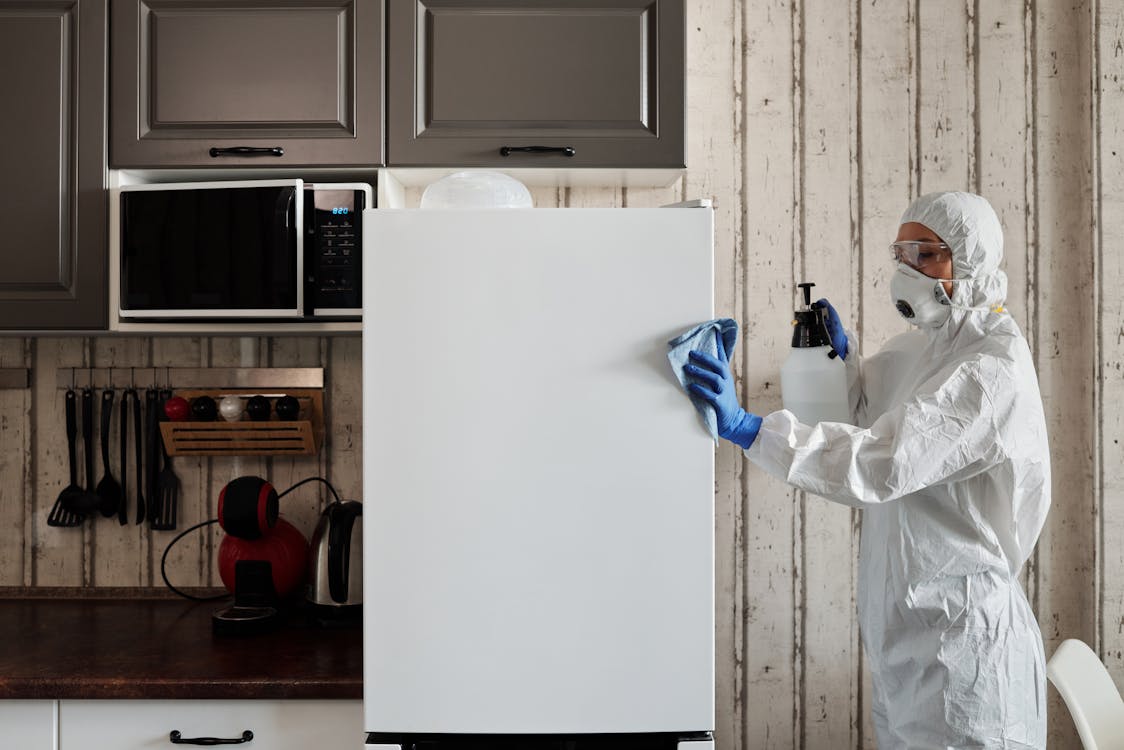
Scenario 1: The Janitorial Professional
Task: A school janitor needs to prepare a 5-gallon bucket of disinfectant solution from a concentrate that requires a 1:256 dilution ratio.
Challenge: How much concentrate is needed for a 5-gallon bucket?
First, convert gallons to a more useful unit like fluid ounces. 1 gallon = 128 oz. 5 gallons = 640 oz (V₂).
V₁ = 640 oz / 256 = 2.5 oz.
Action: The janitor will measure 2.5 fluid ounces of concentrate, add it to the bucket, and then fill the bucket with water to the 5-gallon mark. This is a practical example of how to calculate dilutions in a trade setting.
Scenario 2: The Laboratory Scientist
Task: A molecular biologist needs to make 400 mL of a 1X TAE buffer from a 25X concentrated stock.
Challenge: This is a classic C₁V₁ = C₂V₂ problem. C₁ = 25X, C₂ = 1X, V₂ = 400 mL.
Calculation: (25X) * V₁ = (1X) * (400 mL) -> V₁ = 16 mL.
Action: The scientist will measure 16 mL of the 25X stock solution using a graduated cylinder and add it to a beaker. They will then add 384 mL of purified water to reach the final volume of 400 mL. For a deeper dive into lab-specific calculations, our guide on the Concentrations and Dilutions Calculator is an excellent resource.
Scenario 3: The Gardener
Task: A home gardener buys a liquid fertilizer that instructs them to use it at a rate of 1 tablespoon per gallon of water. They only need to mix a 2-quart watering can.
Challenge: This problem involves scaling down a recipe and converting units.
1 gallon = 4 quarts. So, the ratio is 1 tbsp per 4 quarts.
The gardener only needs 2 quarts (half). Therefore, they need 0.5 tablespoons (1.5 teaspoons).
This shows that understanding how to calculate dilutions is often about proportional reasoning.
Chapter 4: The Special Case of Serial Dilutions
What happens when your calculation tells you to measure a volume that is too small to be accurate, like 0.01 microliters? The solution is a serial dilution. This is a critical technique for anyone learning how to calculate dilutions for scientific applications.
Scenario: You have a 1 M stock of a drug and need to make 10 mL of a final solution at 100 nM.
Direct Calculation: V₁ = 0.001 µL (impossible to pipette accurately).
Planning a Serial Dilution: Perform successive 1:100 dilutions.
Step 1: Dilute 1 M stock 1:100 to get 10 mM.
Step 2: Dilute 10 mM stock 1:100 to get 100 µM.
Step 3: Dilute 100 µM stock 1:100 to get 1 µM (1000 nM).
Step 4: Dilute 1000 nM stock 1:10 to get 100 nM.
This multi-step process is a core part of how to calculate dilutions for creating standard curves in assays.
Chapter 5: Understanding Ratio Dilutions
Instructions like “make a 1:10 dilution” are common but can be dangerously ambiguous. Knowing how to calculate dilutions from ratios means first understanding what the ratio signifies.
5.1 The Two Interpretations of a Ratio
- Method A (Total Parts): 1 part solute + 9 parts solvent = 10 total parts. This results in a final solution where the solute is 1/10th of the total volume (a 10% solution). This is the standard convention in scientific fields.
- Method B (Added Parts): 1 part solute + 10 parts solvent = 11 total parts. This results in a final solution where the solute is 1/11th of the total volume (~9.1% solution). This convention is sometimes used in trade industries.
When you see a ratio, you must clarify which method is intended. If you are writing instructions, it is much clearer to state “dilute to a final concentration of 10%” or “create a 10-fold dilution.” Our 1:10 Dilution Calculator guide explores this concept further.
Chapter 6: The Special Case of Essential Oils
Calculating dilutions for aromatherapy involves different units and safety considerations. Here, we are usually dealing with drops and percentages.

Scenario: You want to make a 2% dilution of lavender oil in a 1-ounce (30 mL) bottle of jojoba oil.
The Math: The standard approximation is that 1 mL of essential oil = 20 drops.
Step 1: V₂ = 30 mL, C₂ = 2% (0.02). Total oil = 30 * 0.02 = 0.6 mL.
Step 2: Drops = 0.6 mL * 20 drops/mL = 12 drops.
Action: You would add 12 drops of lavender oil to your 1-ounce bottle. For more detailed safety information and calculations, our Essential Oil Dilution Calculator article is an invaluable tool.
Chapter 7: Conclusion: From Calculation to Confidence
The ability to accurately perform dilutions is a gateway skill. It is essential for safety, efficacy, and reproducibility in countless applications. While the C₁V₁ = C₂V₂ formula is simple, the real challenge lies in managing units, interpreting ratios, and knowing when a serial dilution is necessary. This guide has shown you how to calculate dilutions across a variety of scenarios, from the lab bench to the garden shed.
For everyday tasks and complex calculations involving difficult unit conversions, using a digital tool is the wisest choice. We encourage you to bookmark our versatile Dilution Calculator. It is designed to handle all these scenarios, providing instant and accurate answers. By removing the risk of manual math errors, it frees you to focus on the task at hand. Master the concepts, but trust the tool for flawless execution.
Frequently Asked Questions (FAQs)
The universal formula is C₁V₁ = C₂V₂, where C₁ and V₁ are the concentration and volume of the initial stock, and C₂ and V₂ are the concentration and volume of the final solution. This is the cornerstone of how to calculate dilutions.
The amount of solvent (e.g., water) needed is the final volume (V₂) minus the initial volume of stock you added (V₁). Solvent Volume = V₂ – V₁.
The dilution factor is the ratio of the final volume to the initial volume (V₂/V₁). A 1:10 dilution has a dilution factor of 10.
No. Your concentration units (C₁ and C₂) must match, and your volume units (V₁ and V₂) must match. Forgetting to convert is the most common mistake when learning how to calculate dilutions.
Using the scientific convention, this means 1 part stock and 99 parts solvent. To make 100 mL, you would use 1 mL of stock and 99 mL of solvent.