
Hydrogen Peroxide Dilution Calculator: The Complete Safety & Mixing Guide
Table of Contents
- What Is Hydrogen Peroxide Dilution
- Why You Must Dilute H2O2
- H2O2 Dilution Calculator Tool
- The Math Behind Every Ratio
- Concentration Grades Explained
- Safety Protocols
- Hydroponics & Plant Care
- Household Cleaning Ratios
- Medical & Wound Care Uses
- Food Safety Applications
- Stability & Storage
- Common Mistakes
- Disposal Guide
- Real-World Scenarios
- Frequently Asked Questions
- Conclusion
Hydrogen Peroxide is one of those chemicals that almost everyone has encountered, yet very few people truly understand. The brown bottle sitting in your bathroom medicine cabinet contains a mild 3% solution that you have probably dabbed on a scrape or used to gargle when you had a sore throat. But that innocent-looking liquid has a far more powerful sibling. Industrial and food-grade Hydrogen Peroxide can reach concentrations of 35%, 50%, or even 90%. At these levels, it is no longer a gentle antiseptic. It becomes a caustic, oxidizing agent capable of causing severe chemical burns on contact with skin, igniting organic materials, and producing violent reactions if contaminated with metals.
This fundamental gap between “what you buy” and “what you need” is the reason a hydrogen peroxide dilution calculator exists. It is a tool that bridges the dangerous distance between concentrated stock solutions and the safe, usable concentrations required for gardening, cleaning, water treatment, and personal care. Without performing an accurate dilution, you are either wasting money by using too much product or, far worse, putting yourself and others at risk of chemical injury. This guide is designed to make you an expert in every aspect of Hydrogen Peroxide dilution, from the underlying chemistry to the practical recipes you can use today.
Chapter 1: What Is Hydrogen Peroxide Dilution and Why Does It Matter?
At its core, dilution is the process of reducing the concentration of a substance by adding more solvent, which in the case of Hydrogen Peroxide is almost always distilled water. When we talk about a hydrogen peroxide dilution calculator, we are referring to the mathematical process of determining exactly how much concentrated stock solution and how much water you need to mix together to achieve a specific, lower concentration.
Let us start with a real-world analogy. Imagine you are making lemonade from a frozen concentrate. The instructions say to add three cans of water to one can of concentrate. That ratio is a dilution. If you add too little water, the lemonade is sickeningly sweet and undrinkable. If you add too much, it tastes like flavored water. The same principle applies to Hydrogen Peroxide, except the consequences of getting the ratio wrong are not just a bad drink but a potential chemical burn, a ruined crop, or an ineffective disinfectant.
The chemical formula for Hydrogen Peroxide is H2O2. It is essentially a water molecule (H2O) with an extra oxygen atom bonded to it. This extra oxygen is weakly bonded and eager to break free, which is what makes H2O2 such a powerful oxidizer. When it breaks down, it releases that extra oxygen and becomes plain water. This decomposition is why it fizzes when you pour it on a wound, as the enzyme catalase in your blood accelerates the breakdown, releasing oxygen bubbles that help clean the wound mechanically.
The concentration of Hydrogen Peroxide is expressed as a percentage. This percentage tells you how many grams of pure H2O2 are present in 100 milliliters of solution. A 3% solution means that in every 100 mL, there are 3 grams of H2O2 and 97 grams of water. A 35% solution means 35 grams of H2O2 and 65 grams of water in the same volume. The difference in reactive power between these two solutions is enormous, which is why a hydrogen peroxide dilution calculator is not a luxury but a necessity.
For those who work with various chemical concentrations regularly, our general dilution calculator provides a versatile platform that handles any C1V1 = C2V2 calculation, not just for H2O2 but for any solution.
Chapter 2: Why You Must Dilute Hydrogen Peroxide Before Use
You might wonder why manufacturers do not simply sell Hydrogen Peroxide at the concentration you need. The answer lies in economics and chemistry. Concentrated solutions are cheaper to ship because you are not paying to transport water. A single liter of 35% H2O2 can make nearly 12 liters of 3% solution, representing significant savings for bulk users like farms, clinics, and cleaning companies. Furthermore, concentrated solutions are more chemically stable in storage than dilute ones, as we will explore later in this guide.
However, using these concentrated solutions without dilution is extremely dangerous. At 35%, Hydrogen Peroxide is classified as a corrosive material by the Occupational Safety and Health Administration (OSHA). Direct skin contact causes immediate whitening of the tissue followed by a burning sensation and potential blistering. Splashes in the eyes can cause permanent corneal damage. Ingestion of even a small amount of 35% H2O2 has caused fatalities due to gas embolism, where the rapid decomposition inside the body produces oxygen gas that enters the bloodstream and blocks blood vessels.
Even at seemingly moderate concentrations like 12%, which is commonly used in hair salons as a bleaching agent, careless handling has resulted in serious injuries. Salon professionals are trained to mix these solutions with developer creams in precise ratios, and any deviation can cause scalp burns. This underscores a universal truth: the hydrogen peroxide dilution calculator is a safety tool first and a convenience tool second.
Beyond safety, accuracy in dilution determines effectiveness. A solution that is too weak will not disinfect surfaces adequately, will not provide enough dissolved oxygen for hydroponic plants, and will not effectively bleach stains. A solution that is too strong will damage the very thing you are trying to treat, whether that is plant roots, kitchen counters, or human tissue. The right concentration, determined by precise calculation, is the sweet spot where maximum benefit meets minimum risk.

Hydrogen Peroxide Dilution Calculator
Your Mixing Recipe:
Measure — mL of —% Hydrogen Peroxide.
Add — mL of Distilled Water.
Total: — mL of —% solution.
Chapter 3: The Mathematics Behind Every Dilution Ratio
Every hydrogen peroxide dilution calculator is powered by one elegant equation that has been the foundation of solution chemistry for over a century. It is called the dilution equation, and it states that the amount of solute (in this case, pure H2O2) before dilution must equal the amount of solute after dilution. You are not creating or destroying the chemical; you are simply spreading it into a larger volume of water.
The formula is written as C1 times V1 equals C2 times V2. Here, C1 represents the concentration of your stock solution, which is the percentage printed on the bottle you purchased. V1 is the volume of that stock solution that you need to measure out, and this is usually the unknown you are solving for. C2 is the concentration you want to achieve in your final mixture. V2 is the total volume of the final mixture you want to end up with.
To solve for V1, you rearrange the equation: V1 equals C2 multiplied by V2, divided by C1. Once you know V1, the volume of water to add is simply V2 minus V1. This is the exact logic our hydrogen peroxide dilution calculator tool above uses, and it is the same logic behind our molarity and dilution calculator for laboratory-grade preparations.
3.1 Worked Example: Converting 35% to 3%
Let us walk through the most common scenario step by step. You have purchased a jug of 35% Food Grade Hydrogen Peroxide and you want to make one liter (1000 mL) of the standard 3% solution for household use.
Step one: Identify your variables. C1 is 35 because your stock is 35 percent. C2 is 3 because your target is 3 percent. V2 is 1000 because you want 1000 milliliters of final solution. V1 is the unknown.
Step two: Plug into the formula. V1 equals 3 times 1000, divided by 35. That gives you 3000 divided by 35, which equals approximately 85.7 milliliters.
Step three: Calculate the water volume. V2 minus V1 equals 1000 minus 85.7, which is 914.3 milliliters.
Step four: The recipe. Pour 914.3 mL of distilled water into a clean, dark-colored container. Then carefully measure and add 85.7 mL of 35% H2O2. Stir gently. You now have one liter of 3% Hydrogen Peroxide. Notice the order: water first, then peroxide. This mirrors the safety rule of adding acid to water, minimizing splash risk.
3.2 Worked Example: Preparing 6% from 12%
Another common scenario occurs in beauty and hair care. Salon professionals often have 12% developer but need 6% for a gentler application. Let us say they need 500 mL.
V1 equals 6 times 500, divided by 12. That is 3000 divided by 12, which equals 250 mL. So they would mix 250 mL of 12% stock with 250 mL of distilled water to get 500 mL of 6% solution. The hydrogen peroxide dilution calculator makes this process instant and error-free.
3.3 Worked Example: Making 1% for Mouth Rinse
Some dental professionals recommend a 1% H2O2 mouth rinse for oral hygiene. Starting from a standard 3% bottle and wanting to prepare 300 mL of 1% solution:
V1 equals 1 times 300 divided by 3, which is 100 mL. Mix 100 mL of 3% H2O2 with 200 mL of distilled water. This produces 300 mL of a gentle 1% rinse. Always consult your dentist before using any H2O2 oral rinse, as improper concentrations can damage gum tissue.
Chapter 4: Understanding Hydrogen Peroxide Concentration Grades
Not all Hydrogen Peroxide bottles are created equal. The grade refers to both the concentration and the purity of the product, and understanding these grades is essential before using any hydrogen peroxide dilution calculator.
The most common grade found in homes is the 3% Pharmaceutical Grade. This is the brown bottle sold at drugstores. It contains stabilizers such as acetanilide, phenol, and sodium stannate to prevent the peroxide from decomposing on the shelf. These stabilizers make it unsuitable for internal use, but perfectly fine for wound cleaning and surface disinfection.
The 6% to 12% Beautician or Cosmetic Grade is used in hair bleaching and teeth whitening products. These concentrations are strong enough to cause skin irritation and require gloves during application. Salon professionals dilute these further depending on the specific treatment being performed.
The 30% Laboratory Reagent Grade is used in scientific research and industrial processes. It is typically purchased from chemical suppliers and requires proper chemical storage, including temperature control and light protection. Researchers who work with this grade often use our serial dilution calculator when preparing experiment-specific concentrations in a stepwise fashion.
The 35% Food Grade is perhaps the most misunderstood product. The term “Food Grade” does not mean it is safe to drink or ingest at this concentration. The name refers to the fact that it is manufactured without the heavy metal stabilizers found in pharmaceutical grade, making it acceptable for use in food processing environments such as aseptic packaging. Many health enthusiasts purchase this grade for DIY cleaning products and hydroponics, which is why the hydrogen peroxide dilution calculator is so popular among this community.
At the extreme end, 90% Rocket Propellant Grade exists. It is used as a monopropellant in aerospace applications. When it decomposes, it produces superheated steam and oxygen at over 600 degrees Celsius, generating thrust. This grade is not commercially available to the public and is handled only by trained professionals with specialized equipment.
Chapter 5: Safety Protocols for Handling Concentrated H2O2
Before you even open the cap of a concentrated Hydrogen Peroxide bottle, you must be prepared. The consequences of carelessness with 35% H2O2 are immediate and painful. This section outlines the non-negotiable safety steps that every user must follow, regardless of the application.
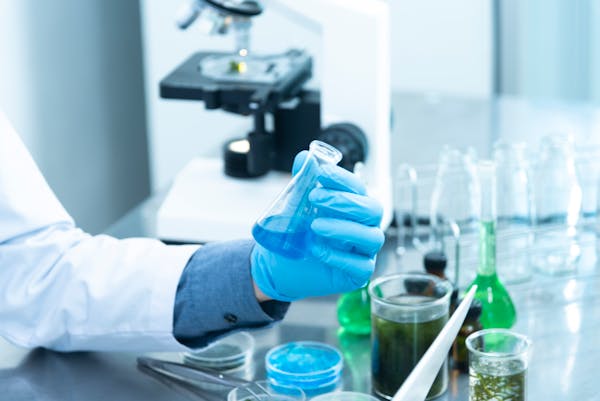
First, you must wear appropriate Personal Protective Equipment. Chemical-resistant nitrile gloves are the minimum requirement. Standard latex gloves can be degraded by high-concentration peroxide. Splash-proof safety goggles, not just glasses, are mandatory because the liquid will splash during pouring and measuring. If you are working with volumes greater than one liter, a face shield provides additional protection. Closed-toe shoes and a long-sleeved shirt or lab coat protect your lower body and arms from drips.
Second, ventilation is critical. While 3% H2O2 produces negligible vapors, concentrations above 10% can release enough vapor to irritate the nose, throat, and lungs. Work outdoors or in a well-ventilated room. If you experience any coughing, burning in the throat, or difficulty breathing, move to fresh air immediately and seek medical attention if symptoms persist.
Third, always use distilled or demineralized water as your diluent. Tap water contains trace amounts of metals like iron, copper, and manganese, which are catalysts that accelerate the decomposition of H2O2. When concentrated peroxide encounters these catalysts, it can decompose exothermically, meaning it releases heat. In extreme cases, this can cause the solution to boil, splash, or even produce enough oxygen gas to pressurize a sealed container dangerously. Using distilled water eliminates this risk.
Fourth, never use metal containers or utensils. Glass, food-grade HDPE plastic, or polypropylene are the approved materials for storing and measuring H2O2. Metal surfaces catalyze decomposition. Even stainless steel, which is resistant to many chemicals, can cause localized decomposition at scratches or welds.
Fifth, always add the peroxide to the water, not the other way around. By pouring the heavier concentrate into a larger volume of water, you ensure that any splash or overflow is primarily water. If you poured water into a container of 35% H2O2 and it splashed, you would be hit with concentrated caustic liquid.
These safety protocols are not suggestions. They are requirements established by organizations like the Centers for Disease Control (CDC) and the Environmental Protection Agency (EPA) for anyone handling oxidizing chemicals. Following them is not optional.
Chapter 6: Hydrogen Peroxide in Hydroponics and Plant Care
One of the fastest-growing uses for diluted Hydrogen Peroxide is in plant cultivation, particularly hydroponics. Plants, like humans, need oxygen. In soil-based gardening, oxygen is naturally present in the air pockets between soil particles. But in hydroponic systems, where roots are submerged in nutrient-rich water, dissolved oxygen can become depleted, creating anaerobic conditions that favor harmful bacteria and fungi, most notably Pythium, the organism responsible for root rot.
Adding a carefully calculated amount of diluted H2O2 to a hydroponic reservoir accomplishes two things simultaneously. First, as the peroxide molecule breaks down, it releases an extra atom of oxygen directly into the water, boosting dissolved oxygen levels at the root zone. Second, that nascent (freshly released) oxygen is a powerful oxidizer that kills anaerobic pathogens like Pythium on contact. The result is healthier, whiter roots and more vigorous plant growth.
The standard recommendation for hydroponic reservoirs is to add 2 to 3 milliliters of 35% H2O2 per gallon of nutrient solution. For a 50-gallon reservoir, that would be 100 to 150 mL. However, this dosage should be adjusted based on the severity of the root rot problem. For prevention, the lower end of the range is sufficient. For active treatment, the higher end or even slightly above is appropriate, as long as you monitor the plants for signs of oxygen toxicity, such as bleaching of root tips.
If you are starting with a 3% solution instead of 35%, the volumes change dramatically. Since 3% is roughly 11.7 times more dilute than 35%, you would need approximately 23 to 35 mL of 3% H2O2 per gallon. For larger reservoirs, this becomes impractical, which is why serious growers invest in 35% Food Grade and use a hydrogen peroxide dilution calculator to prepare working solutions. For nutrient concentration management in hydroponics, our PPM calculator is another essential tool.
Beyond root health, diluted H2O2 is used as a foliar spray to combat powdery mildew and other leaf-surface fungi. A 1% solution sprayed on leaves in the morning, before direct sunlight, can reduce mildew significantly. However, avoid spraying during intense sunlight, as the combination of H2O2 and UV radiation can cause leaf burn.
Chapter 7: Household Cleaning Ratios and Applications
Hydrogen Peroxide is one of the most effective and environmentally friendly disinfectants available. Unlike bleach, which leaves behind chlorine compounds, H2O2 breaks down into water and oxygen, making it safe for use around children, pets, and food preparation surfaces. The EPA has registered Hydrogen Peroxide as an effective disinfectant against a wide range of pathogens, including bacteria, viruses, and fungi.
For general surface disinfection, a 3% solution is the gold standard. You can pour pharmacy-grade 3% H2O2 directly into a dark spray bottle and use it on countertops, cutting boards, door handles, and bathroom fixtures. Allow a contact time of at least 10 minutes before wiping. For tougher jobs like removing mold from grout or tile, a 6% to 10% solution is more effective. To prepare a 6% solution from 35% stock, the hydrogen peroxide dilution calculator tells you to mix approximately 171 mL of stock with 829 mL of distilled water to make one liter.
Hydrogen Peroxide is also an excellent laundry booster. Adding one cup (approximately 240 mL) of 3% H2O2 to the bleach dispenser of your washing machine brightens whites and removes organic stains like blood, wine, and grass without the fabric-damaging effects of chlorine bleach. For colored fabrics, test on an inconspicuous area first, as H2O2 is an oxidizer and can lighten some dyes.
In the kitchen, a 1% to 1.5% solution makes an effective vegetable and fruit wash. Soak produce for five minutes, then rinse thoroughly with clean water. This removes surface bacteria, pesticide residues, and extends the shelf life of berries and leafy greens by killing mold spores.
One critical warning for household users: never mix Hydrogen Peroxide with vinegar (acetic acid) in the same container. While each is safe individually, combining them creates Peracetic Acid, a corrosive compound that can cause chemical burns to the skin and damage to the respiratory tract. You can use them sequentially, spraying one, wiping, and then spraying the other, but never in a single bottle.
Chapter 8: Medical and Wound Care Applications
For decades, the standard first-aid advice was to pour 3% Hydrogen Peroxide on a cut to “clean it out.” The dramatic fizzing action was reassuring, as it felt like the chemical was actively killing germs. While it is true that H2O2 does have antibacterial properties, modern wound care science has become more nuanced. The National Institutes of Health (NIH) has published research showing that while H2O2 kills bacteria, it also damages healthy tissue cells called fibroblasts, which are essential for wound healing. This means that repeated application of H2O2 to an open wound can actually slow down the healing process.
The current medical consensus is that 3% H2O2 can be used for a single, initial cleaning of a dirty wound, particularly when soap and clean water are not available. However, it should not be used as a repeated daily wound care treatment. For ongoing wound management, saline solution (0.9% sodium chloride) is preferred because it cleanses without damaging tissue.
Where Hydrogen Peroxide excels in medicine is in oral care. A 1% to 1.5% solution used as a mouthwash has been shown to reduce oral bacterial load, whiten teeth mildly, and help heal minor gum inflammation. The American Dental Association does not formally endorse H2O2 mouthwash but acknowledges its use in over-the-counter whitening products. To prepare a 1.5% oral rinse from a 3% bottle, mix equal parts of 3% H2O2 and distilled water. A hydrogen peroxide dilution calculator confirms this: V1 equals 1.5 times 100 divided by 3, which is 50 mL of H2O2 to 50 mL of water for 100 mL of rinse.
Chapter 9: Food Safety and Food Processing Applications
In the food industry, Hydrogen Peroxide serves as a critical antimicrobial agent. It is used in aseptic packaging, where cartons for milk and juice are sterilized with a spray of 35% H2O2 and then dried with hot air, leaving no chemical residue. This process is why shelf-stable milk cartons can last months without refrigeration, as the packaging is sterile when sealed.
For home food preservation, a dilute H2O2 wash extends the freshness of produce. Strawberries, for example, are notorious for developing mold within a day or two of purchase. Soaking them in a 1% H2O2 solution for five minutes, then rinsing and drying, can extend their refrigerator life by three to five days. The H2O2 kills the mold spores on the surface without penetrating the fruit.
In aquaculture, Hydrogen Peroxide is used to oxygenate fish ponds and control parasites. The dosage must be carefully controlled to avoid harming the fish, as their gills are sensitive to oxidizing agents. Typical treatment concentrations range from 25 to 100 ppm (parts per million), which for a 35% stock corresponds to extremely small volumes per liter of pond water. For ppm-level calculations, our PPM calculator is the appropriate tool.
Chapter 10: Stability, Storage, and Shelf Life
Hydrogen Peroxide is inherently unstable. The oxygen-oxygen bond in the H2O2 molecule is weak, and the molecule naturally wants to break apart into water and oxygen gas. This decomposition is accelerated by three primary factors: light, heat, and catalytic contaminants. Understanding these factors is essential for anyone who purchases concentrated H2O2 and relies on a hydrogen peroxide dilution calculator to prepare working solutions over time.
Light, particularly ultraviolet light from the sun, provides the energy needed to break the O-O bond. This is why Hydrogen Peroxide is always sold in opaque or dark-colored containers. Transferring it to a clear glass bottle on your bathroom shelf is a guaranteed way to render it inert within weeks. If you prepare a diluted solution, store it in a dark, opaque HDPE spray bottle.
Heat accelerates decomposition exponentially. For every 10 degrees Celsius increase in temperature, the rate of decomposition roughly doubles. Storing 35% H2O2 in a hot garage during summer can cause significant concentration loss within a month. Ideally, concentrated H2O2 should be stored in a refrigerator, separate from food items, in its original, vented container. The venting is important because as H2O2 decomposes, it releases oxygen gas, which can pressurize a sealed container to the point of bursting.
Catalytic contamination is perhaps the most insidious factor. Metals like iron, copper, manganese, and even dust particles act as catalysts that dramatically speed up decomposition. Dipping a used spoon into a bottle of 35% H2O2 can introduce enough organic matter and metal traces to visibly accelerate decomposition, causing the solution to bubble and heat up. This is why you should always pour out what you need rather than dipping instruments into the stock bottle.
Under ideal conditions, an unopened bottle of 35% H2O2 can last one to two years. Once opened, the shelf life drops to three to six months for concentrated solutions and one to two months for diluted solutions. This is another reason why the hydrogen peroxide dilution calculator is valuable: prepare only what you need, when you need it, rather than diluting an entire bottle that will degrade before you can use it all.
Chapter 11: Common Mistakes and How to Avoid Them
Even with a calculator, human error can compromise the safety and effectiveness of a dilution. Here are the most common mistakes people make and the simple fixes for each.
The first and most dangerous mistake is adding water to concentrated peroxide instead of adding peroxide to water. When water hits a dense, concentrated oxidizer, the localized reaction at the surface can produce enough heat and gas to cause spattering. Always start with the water in your container and then carefully add the measured amount of concentrate.
The second mistake is using tap water. As discussed in the stability chapter, tap water contains dissolved metals that catalyze decomposition. Your freshly prepared 3% solution can lose half its potency within hours if mixed with mineral-rich tap water. Always use distilled or reverse-osmosis purified water.
The third mistake is storing the diluted solution in an inappropriate container. Clear glass bottles, metal containers, and loosely capped jars are all problematic. Use dark-colored, food-grade HDPE or polypropylene bottles with tight-fitting caps. If the solution is for a spray bottle, ensure the spray mechanism is plastic, not metal.
The fourth mistake is guessing the concentration. Many people have an old bottle of H2O2 with a faded label or no label at all. Using the hydrogen peroxide dilution calculator with an incorrect starting concentration will produce a solution that is either dangerously strong or ineffectively weak. If you are unsure of the concentration, use H2O2 test strips, which are inexpensive and available from pool supply stores.
The fifth mistake is mixing H2O2 with other chemicals. Besides the vinegar warning mentioned earlier, Hydrogen Peroxide should never be mixed with bleach (sodium hypochlorite), ammonia, or strong acids. These combinations produce toxic gases or violent reactions. Use H2O2 as a standalone product.
Chapter 12: How to Dispose of Hydrogen Peroxide Safely
One of the great advantages of Hydrogen Peroxide over other industrial chemicals is its environmentally benign decomposition products: water and oxygen. However, disposal method depends on the concentration.
Solutions below 8% can generally be poured down the drain with plenty of running water. The H2O2 will rapidly decompose in the municipal water system, posing no environmental threat. Run the tap for at least 30 seconds after disposal to flush the pipes thoroughly.
Solutions above 8% require dilution before disposal. Use the hydrogen peroxide dilution calculator in reverse: determine how much water you need to add to bring the concentration below 8%. For example, to dispose of 500 mL of 35% H2O2, you would need to dilute it to at least 8%. Using the formula, the final volume would need to be at least 35 times 500 divided by 8, which equals approximately 2,188 mL. So add at least 1,688 mL of water to the 500 mL of concentrate, then pour the diluted solution down the drain with running water.
Alternatively, you can let highly concentrated H2O2 decompose naturally by leaving the open container in a safe outdoor area away from children, pets, and flammable materials. Within a few days to weeks, it will degrade to a low enough concentration to be safely poured away. Never seal a container of decomposing H2O2, as the released oxygen gas can cause the container to rupture.
Chapter 13: Real-World Scenarios Solved with the Calculator
To cement your understanding, let us walk through several additional real-world scenarios that different types of users encounter.
Scenario 1: The Aquarium Hobbyist
A fishkeeper has a 100-gallon freshwater tank with an algae problem. They want to dose the tank with 25 ppm H2O2 using 3% stock. First, 100 gallons equals approximately 378,541 mL. At 25 ppm, the tank needs 25 mg of H2O2 per liter. For 378.5 liters, that is 378.5 times 25, equaling 9,463 mg, or roughly 9.5 grams. Since 3% H2O2 contains 30 mg per mL, the volume needed is 9,463 divided by 30, which is approximately 315 mL. So, 315 mL of 3% H2O2 spread evenly across the tank will achieve a 25 ppm concentration.
Scenario 2: The Hot Tub Owner
A homeowner uses H2O2 instead of chlorine to sanitize a 300-gallon hot tub. The recommended maintenance level is 30 to 50 ppm. Using 35% stock, the calculation is similar but with a higher concentration source. The volume of 35% H2O2 needed for a 300-gallon tub at 50 ppm is approximately 48 mL per treatment, added while the jets are running to ensure even distribution. This scenario shows why the hydrogen peroxide dilution calculator combined with a PPM understanding is essential for non-chlorine water treatment.
Scenario 3: The Farmer
An organic farmer wants to prepare a 3% foliar spray from 35% stock for treating 500 plants. Each plant gets about 200 mL of spray, so the total volume needed is 100,000 mL (100 liters). Using the formula, V1 equals 3 times 100,000 divided by 35, which is 8,571 mL, or roughly 8.6 liters of 35% H2O2 mixed with 91.4 liters of water. Without a calculator, this math is tedious and error-prone.
Frequently Asked Questions
No reputable medical organization recommends ingesting Hydrogen Peroxide at any concentration. While some alternative health proponents suggest drinking highly diluted H2O2, this practice has been associated with serious adverse events including gas embolism, gastrointestinal burns, and death. The FDA has explicitly warned against this practice. Use the hydrogen peroxide dilution calculator only for external applications.
Yes. All concentrations of H2O2 degrade over time. An unopened bottle of 3% typically lasts about three years. Once opened, it begins losing potency and should be used within six months. Concentrated 35% solutions last one to two years unopened and three to six months after opening. If your H2O2 does not fizz when poured on a raw potato, it has likely degraded into water.
Never mix them in the same container. The combination produces Peracetic Acid, which is corrosive and can cause chemical burns and respiratory irritation. You may use them sequentially on surfaces, spraying and wiping one before applying the other, but never combine them into a single solution.
Tap water contains dissolved metals like iron and copper that catalyze the decomposition of H2O2. Using tap water can cause your freshly diluted solution to lose potency within hours. Distilled or demineralized water is free of these contaminants, ensuring your solution remains stable for weeks to months when stored properly.
A concentration of 3% is effective against most household mold on non-porous surfaces with a 10-minute contact time. For deeply embedded mold in porous materials like grout or wood, a 6% to 10% solution is more effective. Always test on an inconspicuous area first, as concentrated H2O2 can bleach colored materials.
The term “Food Grade” refers to purity standards, not safety for consumption. 35% Food Grade H2O2 is caustic and dangerous in concentrated form. It is called “Food Grade” because it lacks the heavy metal stabilizers found in pharmaceutical grade, making it safe for use in food processing environments after appropriate dilution and rinsing.
The standard recommendation is 2 to 3 mL of 35% H2O2 per gallon of nutrient solution. For 3% stock, use approximately 23 to 35 mL per gallon. Add during reservoir changes and monitor root health. Overdosing can bleach and damage roots, so start with the lower end and increase only if needed.
Many over-the-counter whitening products contain low concentrations of H2O2 (1.5% to 10%). A 1.5% solution used as a brief mouth rinse can provide mild whitening over time. However, concentrations above 3% should not be used without dental supervision, as they can damage enamel and irritate gum tissue. Always consult your dentist before starting any whitening regimen.
Immediately flush the affected area with large amounts of cool running water for at least 15 minutes. The skin will turn white at the point of contact, which is called chemical blanching. Do not apply ointments or creams until the area has been thoroughly flushed. If blistering occurs, the area is large, or the concentration was above 10%, seek medical attention.
Use H2O2 test strips, available from pool and spa supply stores. These strips change color based on the concentration of peroxide in the solution. Alternatively, the “potato test” provides a qualitative check: place a drop of H2O2 on a raw potato slice. Vigorous fizzing indicates the solution is active. No fizzing means it has degraded.
No. UV light from the sun and even indoor fluorescent lighting accelerates the decomposition of H2O2. Always store it in dark-colored, opaque containers made of HDPE or polypropylene plastic. If you must use a clear container, wrap it in aluminum foil or store it inside a dark cabinet.
At 3%, H2O2 is sometimes used by veterinarians to induce vomiting in dogs that have ingested toxins. However, this should only be done under veterinary guidance. H2O2 should never be given to cats, as it can cause severe gastric ulceration. Keep concentrated solutions stored securely away from all animals.
The fizzing is caused by the enzyme catalase, which is found in blood and damaged tissue cells. Catalase rapidly decomposes H2O2 into water and oxygen gas, producing visible bubbles. Intact skin contains very little exposed catalase, so the reaction is minimal.
The C1V1 = C2V2 formula is universal for all simple dilutions. While this page is tailored for H2O2, the same mathematical logic applies to bleach, acids, and any percentage-based solution. For a broader tool, visit our general dilution calculator which handles any chemical.
For volumes above five liters of 30% or higher concentration, contact your local hazardous waste disposal facility. Do not pour large quantities of concentrated H2O2 into drains or sewers, as the rapid oxygen release can damage pipes and overwhelm water treatment systems. For smaller volumes, dilute to below 8% before flushing with copious running water.
Conclusion: Respect the Chemistry
Hydrogen Peroxide is a remarkable chemical compound. It disinfects without leaving toxic residue. It oxygenates water for healthier plant roots. It whitens teeth, removes stains, and even powers rockets. But all of this versatility comes with a fundamental requirement: you must dilute it correctly for the task at hand. A 3% solution that gently cleans a countertop is chemically identical to the 90% solution that launches satellites into orbit. The only difference is the water you add.
Using a hydrogen peroxide dilution calculator is not about laziness or inability to do math. It is about eliminating the single most common source of error in chemical preparation: human arithmetic under pressure. When you are wearing gloves and goggles, measuring a caustic liquid into a container, the last thing you want to worry about is whether you divided correctly. The calculator handles the math so you can focus on the safety and the technique.
We encourage you to bookmark this guide and return to it whenever you need to prepare a new batch. Explore our suite of related tools, including the general dilution calculator, the molarity calculator, the serial dilution calculator, and the peptide reconstitution calculator. Together, these tools form a complete digital laboratory that ensures your preparations are always precise, safe, and effective.
Respect the concentration. Trust the math. And never, ever, skip the safety goggles.
Need More Lab Tools?
Explore our complete suite of dilution, molarity, and ppm calculators.
Visit Calculator Suite