
Hydrogen Peroxide Dilution Calculator: Precision & Safety Guide
Convert 35% Food Grade to 3%, Prepare Hydroponic Solutions, and Master Chemical Safety.
1. Why Hydrogen Peroxide Dilution Requires Precision
Hydrogen Peroxide ($H_2O_2$) is one of the most versatile chemicals in existence, used for everything from wound disinfection to rocket fuel. However, the difference between a helpful sanitizer and a hazardous chemical burn lies entirely in the concentration. Commercially available Hydrogen Peroxide typically comes in high concentrations like 35% (Food Grade) or 50% (Industrial Grade) to save on shipping costs.
To use it safely at home, in hydroponics, or in a laboratory, you must dilute it down to safer levels like 3%, 6%, or 12%. A simple math error here can be dangerous. That is why using a dedicated Hydrogen Peroxide Dilution Calculator is not just convenient—it is a safety necessity.
In this guide (Part 1), we will cover the fundamental mathematics, the safety protocols for handling high-concentration $H_2O_2$, and provide you with an instant calculator tool. For broader dilution needs, you can always refer to our General Dilution Calculator.
2. Critical Safety Protocols Before You Pour
WARNING: High Concentration Hazard
35% Hydrogen Peroxide is caustic. It is not the same as the brown bottle (3%) in your medicine cabinet. Direct contact with skin causes immediate whitening and severe chemical burns. Contact with eyes can cause blindness.
Before calculating your ratios, ensure you are compliant with safety standards. If you are working in a professional lab, refer to our Molarity Calculator for precise molar preparations. For H2O2 specifically:
- PPE is Mandatory: Wear nitrile gloves, splash-proof safety goggles, and closed-toe shoes.
- Ventilation: Work in a well-ventilated area. High concentrations can release vapors that irritate the respiratory tract.
- Water Source: Always use Distilled or Demineralized water. Tap water contains heavy metals that can cause H2O2 to decompose rapidly, releasing heat and oxygen gas.
- The “Acid Rule”: While H2O2 acts like an acid in reactions, the dilution rule is similar: Add the Peroxide to the Water, not the other way around, to minimize splashback risks.

3. The Mathematics: How the Calculation Works
The Hydrogen Peroxide Dilution Calculator operates on the fundamental dilution equation known as $C_1V_1 = C_2V_2$. This formula is the backbone of all solution preparations, whether for serial dilutions in microbiology (see our Serial Dilution Calculator) or industrial chemical mixing.
Where:
- $C_{stock}$: The concentration you have (e.g., 35%).
- $C_{desired}$: The concentration you want (e.g., 3%).
- $V_{total}$: The final volume you want to end up with.
- $V_{peroxide}$: The amount of concentrated chemical you need to pour.
Example: Making 1 Liter of 3% from 35%
Let’s say you bought a gallon of 35% Food Grade H2O2 and want to fill a 1 Liter (1000 mL) spray bottle with 3% solution for cleaning.
- Identify Variables: $C_1 = 35$, $C_2 = 3$, $V_2 = 1000$.
- Apply Formula: $V_1 = (3 \times 1000) / 35$.
- Calculate: $3000 / 35 = 85.7$ mL.
- Determine Water: $1000 – 85.7 = 914.3$ mL.
So, you would mix 85.7 mL of the strong stuff with 914.3 mL of water. Doing this manually every time is prone to error, which is why using the tool above is recommended.
4. Understanding Concentration Grades
Not all Hydrogen Peroxide is created equal. The Hydrogen Peroxide Dilution Calculator math remains the same, but the application differs based on the grade:
- 3% Pharmaceutical Grade: Used for wound cleaning and household disinfection. Contains stabilizers.
- 6-12% Beautician Grade: Used for hair bleaching. Stronger and requires care.
- 30% Reagent Grade: Used in scientific experiments.
- 35% Food Grade: Used in food production (e.g., aseptic packaging) and by health enthusiasts. Note: “Food Grade” does not mean edible in concentrated form!
- 90% Rocket Grade: Used as a propellant. Highly explosive.
When using the calculator, ensure you know exactly which percentage you are starting with. Mistaking 35% for 3% can be disastrous.
Continue to Part 2 to learn about Hydroponics Applications and Storage Stability…
In Part 1, we mastered the mathematics and safety of dilution. Now, in Part 2, we apply that knowledge to real-world scenarios. Whether you are a gardener fighting root rot or a homeowner looking for a bleach alternative, the Hydrogen Peroxide Dilution Calculator logic remains your best tool.
5. Application: Hydroponics & Plant Care
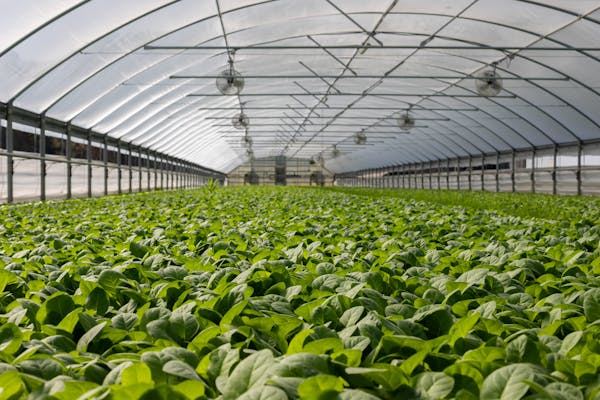
Hydrogen Peroxide is a secret weapon for gardeners. It adds oxygen to the soil, kills fungus gnats, and treats root rot. However, plants are sensitive. Pouring 35% directly will kill your crop instantly. You must dilute it down to roughly 0.1% to 3% depending on the use case.
Root Rot Treatment
Target: 3% Solution directly on roots.
Recipe: Mix 1 part 35% H2O2 with 11 parts water.
Usage: Dip roots or water soil. The fizzing indicates it is killing the anaerobic bacteria causing rot.
Water Reservoir Maintenance
Target: 2-3 mL of 35% per gallon.
Usage: Adds dissolved oxygen to the water and prevents algae buildup.
For precise nutrient measurements in hydroponics alongside H2O2, many growers also use our PPM Calculator to balance their nutrient solutions.
6. Application: Household Cleaning & Disinfection
CDC and EPA recognize Hydrogen Peroxide as a high-level disinfectant. It breaks down into water and oxygen, leaving no toxic residue unlike bleach.
| Application | Target Strength | Mixing Ratio (from 35% Stock) | Contact Time |
|---|---|---|---|
| Countertop Sanitizer | 3% | 1 part H2O2 : 11 parts Water | 10 Minutes |
| Vegetable Wash | 1% – 1.5% | 1 part H2O2 : 22-30 parts Water | 5 Minutes (Rinse after) |
| Mold Removal | 6% – 10% | 1 part H2O2 : 3-5 parts Water | Spray & Scrub |
When preparing these solutions, always use a clean, opaque spray bottle. Light degrades the solution rapidly. If you are preparing peptide solutions for cleaning research, check our Peptide Reconstitution Calculator.
7. The Stability Problem: Why Your H2O2 “Expires”
Have you ever poured Hydrogen Peroxide on a cut and it didn’t fizz? That means it has degraded into plain water. The chemical bond in $H_2O_2$ is unstable. It naturally wants to release that extra oxygen atom.
Degradation Factors
- Light: UV rays break the bond instantly. That is why it is always sold in dark brown or opaque white bottles.
- Heat: Store in a cool place. 35% grade is often kept in the fridge.
- Contamination: Dipping a dirty pipette into the stock bottle introduces metal ions (like iron or copper) which catalyze decomposition.
Pro Tip: Never return unused diluted solution back into the stock bottle. Once it leaves the bottle, consider it compromised. Prepare only what you need using the calculator from Part 1 to minimize waste.
Coming Up in Part 3: We will conclude this guide with a detailed troubleshooting FAQ section, addressing common questions like “Does it expire?”, “Can I mix it with vinegar?”, and how to dispose of old stock safely.
You have calculated your ratios and applied them. But what if things go wrong? Or what if you have a bottle sitting in the garage for 3 years? In this final section, we address the most burning questions about safety, chemistry, and disposal.
8. Frequently Asked Questions (Troubleshooting)
How to Dispose of Expired H2O2 Safely
Hydrogen Peroxide degrades into Water ($H_2O$) and Oxygen ($O_2$), making it one of the most eco-friendly chemicals to dispose of.
- Low Concentration (< 3%): Can be safely poured down the sink with running water.
- High Concentration (> 10%): Do NOT pour directly into drains. Dilute it heavily with water (at least 1:10 ratio) in a bucket before disposal, or allow it to sit in an open container (safely away from kids/pets) to degrade naturally over a few days.
9. Conclusion: Precision is Power
Whether you are a chemist balancing equations, a gardener tending to roots, or simply keeping your home germ-free, the power of Hydrogen Peroxide lies in its correct application. Using a Hydrogen Peroxide Dilution Calculator eliminates the guesswork, prevents dangerous chemical burns, and ensures you get the maximum efficacy from your stock solution.
Remember the golden rule: “Respect the Concentration.” 35% is a hazmat material; 3% is a household helper. The only difference is the water you add.
Need More Lab Calculations?
Explore our suite of precision tools for Molarity, ppm, and Peptide Reconstitution.
Explore All Calculators