
Acid Dilution Calculator: The Encyclopedia of Chemical Safety & Protocol
Table of Contents
- 1. High-Stakes Real Life Scenarios
- 2. Mathematical Definition & Theory
- 3. Acid Dilution Calculator Tool
- 4. Thermodynamics: Heat of Dilution
- 5. The Golden Rule: AAAW
- 6. Industrial Engineering Applications
- 7. Comprehensive SOP Checklist
- 8. Materials Science: Compatibility
- 9. Acid-Specific Protocols (HF, H2SO4)
- 10. The Physics of Volume Contraction
- 11. Environmental Stewardship
- 12. Fatal Mistakes & Emergency Response
- 13. Integrated Digital Lab Ecosystem
- 14. Future of Chemical Automation
- 15. Extensive FAQ Database
- 16. Conclusion
1. High-Stakes Real Life Scenarios: Why Accuracy is Non-Negotiable
The act of acid dilution is arguably the most fundamental yet hazardous operation in wet chemistry. It sits at the intersection of stoichiometry and thermodynamics. While it may appear to be a simple task of mixing liquids, the energetic potential stored within chemical bonds transforms this routine procedure into a high-stakes operation.
From the semiconductor fabrication plants in Silicon Valley to the water treatment facilities of rural municipalities, the acid dilution calculator is the silent guardian of safety and efficiency. A calculation error here does not merely result in “bad data”—it results in thermal runaways, equipment corrosion, environmental regulatory breaches, and severe human injury. Let us explore three diverse scenarios where precision is paramount.
Scenario #1 – Municipal Water Treatment (The pH Crisis)
Consider a water treatment plant responsible for the drinking water of a city of one million people. The river water inlet has spiked in turbidity and alkalinity due to heavy rains. The process engineer must dose Sulfuric Acid ($H_2SO_4$) to lower the pH for the coagulation process to work.
The acid is delivered at 98% concentration but must be diluted to 10% before injection into the main pipe to prevent corrosion of the dosing pumps. If the engineer miscalculates the dilution ratio:
Over-concentration: The acid eats through the pump seals, causing a leak that necessitates a plant shutdown.
Under-concentration: The pH remains too high, the coagulant fails to work, and the city’s water fails turbidity standards, triggering a “Boil Water Advisory” and public panic.
This is why engineers utilize a validated acid dilution calculator to ensure the stoichiometry matches the flow rate perfectly.
Scenario #2 – Semiconductor Manufacturing (The Piranha Etch)
In a cleanroom, a microchip undergoes a cleaning process known as “Piranha Etch”—a mixture of Sulfuric Acid and Hydrogen Peroxide. This mixture is used to strip organic residues off silicon wafers. The reaction is violently exothermic.
The protocol demands a precise dilution of the acid before mixing with peroxide. If the acid is too concentrated, the mixture can boil instantly upon combination, spraying hot, corrosive liquid onto the technician and destroying a batch of wafers worth $50,000. Precision in the initial dilution calculation is the only barrier against this thermal runaway.
Scenario #3 – The Educational Hazard
In a university chemistry lab, a first-year student needs to prepare 1 Liter of 1M Hydrochloric Acid. Running late, they perform a mental calculation, confusing Molarity with Volume. They add water rapidly to a beaker of concentrated acid. The solution “bumps” (flash boils), shattering the beaker.
This is the most common accident in academic labs. It is entirely preventable. By teaching students to use an acid dilution calculator, educators reinforce the discipline of planning before acting, shifting the focus from mental math to physical safety protocols.
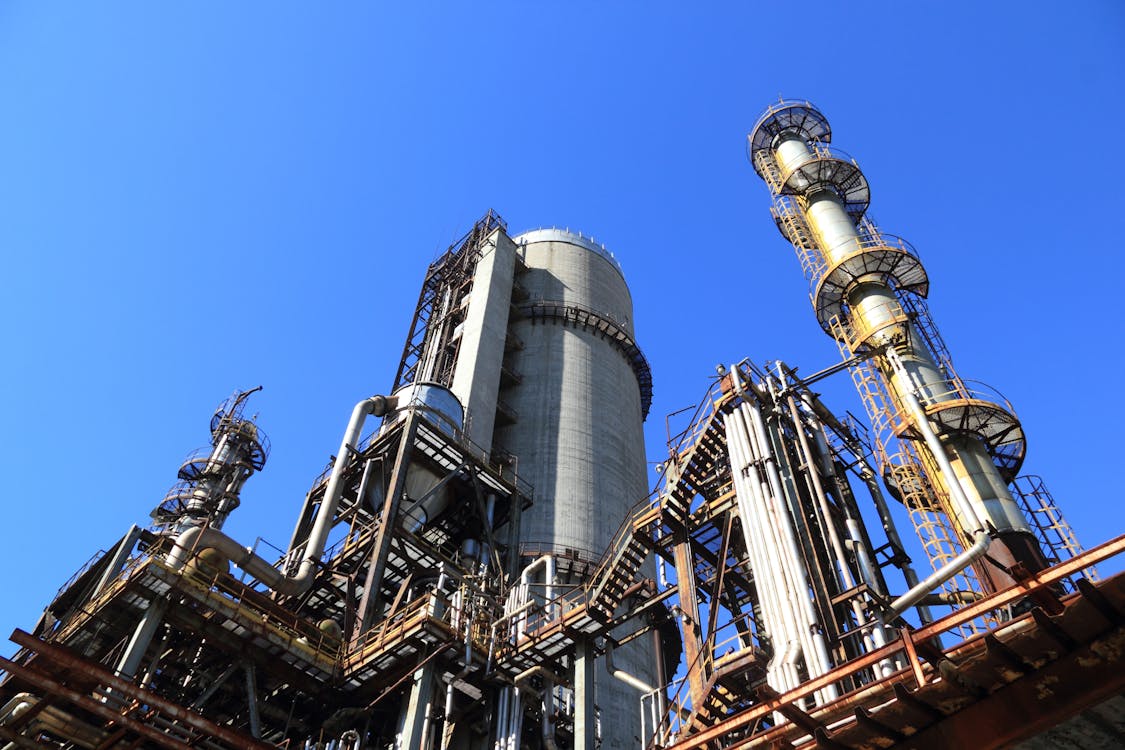
2. Mathematical Definition & Theory
At its core, acid dilution is a problem of mass balance. The amount of solute (acid molecules) remains constant; only the amount of solvent (water) changes. An acid dilution calculator solves for the unknown variable in this relationship.
The Fundamental Equation
$$ C_1 \times V_1 = C_2 \times V_2 $$
Where:
$C_1$ (Initial Concentration): The “Stock” solution. This is often Molarity (M), Normality (N), or Percentage (%).
$V_1$ (Initial Volume): The volume of stock acid you need to pour. This is usually the unknown variable you are solving for.
$C_2$ (Final Concentration): The target concentration required for your reaction.
$V_2$ (Final Volume): The total amount of solution you wish to prepare.
The Density Factor (Specific Gravity)
Advanced acid calculations are complicated by the fact that concentrated acids are liquids sold by weight percentage (w/w), but laboratory measurements are done by volume (mL).
Example: Concentrated Sulfuric Acid is 98% w/w. To convert this to Molarity, you must know its density (1.84 g/mL).
$$ Molarity = \frac{\% \times Density \times 10}{Molecular Weight} $$
A robust acid dilution calculator often handles these conversions internally, preventing the user from needing to look up molecular weights and densities manually.
Acid Dilution Calculator
Calculate exact volumes for safe and precise acid preparation.
Always Add Acid to Water! Never Water to Acid!
Preparation Protocol
Follow this order strictly to prevent accidents:
- Measure — mL of cold, distilled water.
- Pour the water into your mixing vessel (beaker/flask).
- Place vessel in an ice bath (if using strong acids like H2SO4).
- Measure — mL of concentrated acid.
- Slowly add the acid to the water while stirring gently.
- Allow the solution to cool to room temperature.
- Top up with water if volume contraction occurred.
Acid Volume ($V_1$): —
Water Volume: —
Total Volume ($V_2$): —
4. Thermodynamics: The Physics of Exothermic Reactions
To respect the process, one must understand the physics. Why does acid dilution generate enough heat to melt plastic or crack glass?
Enthalpy of Solution ($\Delta H_{soln}$)
When a strong acid like Sulfuric Acid ($H_2SO_4$) is mixed with water, it dissociates into ions ($H^+$ and $HSO_4^-$). This process is driven by the Hydration Energy of the proton. Water molecules are dipoles; they aggressively surround the positive hydrogen ions. The formation of these new bonds releases a massive amount of energy.
The Numbers: The enthalpy of solution for sulfuric acid is approximately -95 kJ/mol. In practical terms, diluting 100 mL of concentrated sulfuric acid can theoretically raise the temperature of the mix by over 100°C instantly. Since water boils at 100°C, the water in the immediate vicinity of the acid drop flashes into steam.
The “Bumping” Phenomenon
This flash-boiling creates a rapidly expanding bubble of steam deep within the liquid. When this bubble rises and bursts, it throws corrosive liquid out of the container. This is called “bumping.” It is the primary cause of acid burns in the face and eyes during manual dilution.
5. The Golden Rule: AAAW
Every chemist learns the mnemonic: “Do as you oughta, add acid to water.” (AAAW). Why does the order of addition change the physics?
Adding Water to Acid (WRONG)
You have a beaker of dense acid. You add a drop of water. Water is less dense ($1.0$ g/mL) than acid ($1.84$ g/mL). The water floats on top. The reaction happens at the surface. The heat is concentrated in that tiny drop of water. It boils instantly and splashes acid everywhere.
Adding Acid to Water (RIGHT)
You have a beaker of water (a large heat sink). You add a drop of acid. The acid is denser, so it sinks to the bottom. The reaction happens deep down. The heat generated has to travel through the large volume of water to escape. The water absorbs the heat safely, warming up but not boiling.
6. Industrial Engineering Applications
In the context of chemical engineering, the acid dilution calculator is scaled up from milliliters to thousands of gallons.
Continuous Dilution Systems
Large factories do not mix acids in buckets. They use static mixers—pipes with internal baffles that mix the acid and water as they flow. The dilution calculator determines the flow rates of the dosing pumps.
Example: To get 10% acid at 100 gallons/minute, the water pump might run at 90 GPM and the acid pump at 10 GPM.
Corrosion Engineering
Dilution is often a prerequisite for transport. Concentrated Sulfuric Acid can actually be stored in carbon steel tanks because it forms a protective iron sulfate layer (passivation). However, dilute sulfuric acid attacks steel aggressively. Therefore, the dilution must happen at the point of use, not in storage. Calculations determine exactly where in the piping system the material transition (from steel to plastic/lined pipe) must occur.

7. Standard Operating Procedure (SOP) Checklist
Professional Laboratory SOP
- Pre-Calculation: Perform the math using the Acid Dilution Calculator. Write the volumes in your lab notebook.
- PPE Verification:
- Eyes: Splash-proof goggles (ANSI Z87.1). Face shield required for volumes > 1L.
- Hands: Nitrile gloves for dilute acids; Butyl or Viton gloves for concentrated nitric/sulfuric.
- Body: Chemical-resistant apron and closed-toe shoes.
- Environment: Ensure the Chemical Fume Hood is operational (check airflow monitor).
- Vessel Choice: Select a Borosilicate (Pyrex) beaker. Inspect for hairline cracks. Thermal shock will shatter compromised glass.
- Water Charge: Add the calculated volume of cold, deionized water.
- Acid Addition: Using a funnel or pipette, add the acid slowly down the side of the glass to minimize splashing.
- Thermal Management: If the beaker gets too hot to touch, stop. Let it cool or place it in an ice bath.
- Final Mix: Stir until optical refraction lines (schlieren) disappear.
8. Materials Science: Container Compatibility
One of the most dangerous errors is dissolving the container itself.
| Material | Compatibility | Notes |
|---|---|---|
| Borosilicate Glass | Excellent | Best for heat resistance. Do NOT use for Hydrofluoric Acid (HF). |
| HDPE Plastic | Good (Cold) | Good chemical resistance, but can melt if the heat of dilution is uncontrolled. |
| Teflon (PTFE) | Superior | Resists almost all acids, including HF. Very expensive. |
| Stainless Steel (304/316) | Poor | Attacked rapidly by Hydrochloric Acid (HCl) and dilute Sulfuric Acid. |
| Carbon Steel | Variable | Okay for 98% H2SO4 (Passivation), disastrous for dilute acid. |
9. Protocol for Specific Acids
Sulfuric Acid ($H_2SO_4$)
Hazard: Extreme heat generation. Highly viscous (syrupy).
Protocol: Use an ice bath. Pour very slowly. Do not seal the bottle immediately after mixing; the heat will pressurize the headspace and burst the bottle.
Hydrochloric Acid ($HCl$)
Hazard: Fumes. Conc. HCl releases Hydrogen Chloride gas, which corrodes lungs and metal.
Protocol: MUST be used in a fume hood. It is less exothermic than sulfuric but poses a greater respiratory risk.
Nitric Acid ($HNO_3$)
Hazard: Strong Oxidizer.
Protocol: Ensure no organic solvents (ethanol, acetone) are nearby. Mixing Nitric acid with organics can cause an immediate explosion or fire. Stains skin yellow instantly (xanthoproteic reaction).
Hydrofluoric Acid ($HF$)
Hazard: The “Bone Seeker.” It penetrates skin without immediate pain, then binds calcium in the blood and bones, causing cardiac arrest.
Protocol: Never use glass. Use Teflon. Always have Calcium Gluconate Gel (antidote) on hand before opening the bottle. Dilution calculation must be triple-checked.
10. The Physics of Volume Contraction
If you mix 500 mL of water and 500 mL of acid, do you get 1000 mL? No. You might get 980 mL.
This counter-intuitive phenomenon is due to the strong attractive forces between the water and acid molecules. They pack together tighter than they do alone.
The Implication: Do not just mix volumes and assume the final volume is correct. The correct protocol is:
1. Add Acid to ~80% of the water.
2. Mix and Cool.
3. “Top up” (QS – Quantum Satis) to the final volume mark on the volumetric flask.
11. Environmental Stewardship (EPA/Neutralization)
Before disposal, waste acid must be neutralized. The acid dilution calculator helps here too. By knowing the exact moles of acid in your waste, you can calculate the exact mass of Sodium Bicarbonate ($NaHCO_3$) needed to neutralize it.
This prevents:
1. Wasting neutralizer.
2. Discharging acidic waste into the sewer (illegal and corrosive to city infrastructure).
12. Fatal Mistakes & Emergency Response
- Skin: Flood with water for 15 minutes immediately. Do not wait. Remove contaminated clothing while under the shower.
- Eyes: Hold eyelids open and flush at eyewash station for 15 minutes. Roll eyeballs to wash all surfaces.
- Ingestion: Do NOT induce vomiting. Drink water or milk to dilute. Call Poison Control immediately.
The “Shaking” Mistake: Never shake a hot acid solution in a closed container. The pressure will explode the cap. Swirl gently or use a magnetic stir bar.
13. Integrated Digital Lab Ecosystem
A single tool cannot solve every problem. Build a complete safety workflow by integrating these complementary resources:
- General Dilution Tool: For non-reactive, safe solutions.
- Peptide Reconstitution: For biological samples sensitive to pH.
- Molarity Calculator: To calculate the grams required for solid acid powders (like Citric or Oxalic Acid).
14. The Future of Chemical Automation
The safest way to dilute acid is to remove the human from the process. Modern “Lab 4.0” facilities utilize automated liquid handling robots inside inert gas chambers. These robots use the data from digital calculators to mix reagents with micron-level precision, completely eliminating the risk of burns or inhalation. As AI enters the lab, these calculators will be integrated directly into the machine’s operating system, validating safety parameters before a pump even turns on.
15. Extensive FAQ Database
No. Tap water contains minerals (Calcium, Magnesium, Chlorine). These can react with the acid to form insoluble precipitates (cloudiness) or dangerous chlorine gas (if mixed with certain acids). Always use Distilled (DI) or Reverse Osmosis (RO) water.
Aqua Regia is a 1:3 mixture of Nitric Acid and Hydrochloric Acid. It is used to dissolve gold. It is extremely unstable and releases toxic nitrosyl chloride gas. Do not store it. Calculate only the exact amount needed for immediate use, and neutralize immediately after.
You likely diluted a strong acid (like Sulfuric) directly in the plastic bottle. The heat of dilution exceeded the melting point of the plastic (often ~120°C for HDPE). Always dilute in Pyrex glass first, cool, then transfer to plastic.
Glacial Acetic Acid freezes at 16.6°C (62°F). If it is solid, let it thaw at room temperature. It is flammable, so keep away from Bunsen burners. Dilute in a fume hood due to the strong vinegar odor which is a respiratory irritant.
Not always. Molarity = Moles/Liter. Normality = Equivalents/Liter.
For $HCl$ (1 proton): 1M = 1N.
For $H_2SO_4$ (2 protons): 1M = 2N.
Always check your protocol units.
Do not use water (it spreads the acid). Use a spill kit containing an absorbent neutralizer (like sodium carbonate/sand mix). Surround the spill, then cover it. Scoop up the solid waste.
Pure mineral acids are usually colorless. Yellowing often indicates contamination with iron (rust) or organics (dust, paper). For Nitric Acid, yellowing is due to decomposition into nitrogen dioxide ($NO_2$) over time.
Generally no. Dilute acids can absorb Carbon Dioxide from the air, changing their pH. They can also grow bacteria (in the case of weak organic acids). Always prepare fresh for critical analytical work.
Concentrated acids last years. Diluted acids (e.g., 0.1M HCl) are stable for 1-2 years if sealed tightly, but their concentration factor should be re-verified (titrated) before use in precise experiments.
Check the bottle label or the Safety Data Sheet (SDS). Common densities:
$H_2SO_4$ = 1.84 g/mL
$HCl$ = 1.19 g/mL
$HNO_3$ = 1.41 g/mL
16. Conclusion
The practice of acid dilution serves as a microcosm for the discipline of science itself. It requires knowledge of theory (thermodynamics), adherence to structure (stoichiometry), and unyielding respect for nature (safety).
Whether you are a student mixing your first beaker or a plant manager overseeing a thousand-gallon tank, the principles remain the same. Accuracy prevents failure. Safety prevents tragedy.
The acid dilution calculator is your partner in this endeavor. It bridges the gap between the theoretical numbers in your notebook and the physical reality of the liquid in your flask. Use it to verify your math, plan your safety protocols, and execute your work with the confidence of a professional.
CDC / NIOSH Pocket Guide to Chemical Hazards
OSHA Laboratory Safety Guidance
American Chemical Society (ACS) Safety
Calculate Safety First
Do not guess with hazardous chemicals. Verify your dilution protocol now.
Open Calculator