
Serial Dilution Calculation Table: The Ultimate Scientific Reference Guide
Table of Contents
- 1. Why You Need a Serial Dilution Calculation Table
- 2. Anatomy of the Table
- 3. The Mathematics Behind Every Row
- 4. Auto Table Generator Tool
- 5. 2-Fold Dilution Table (Worked Example)
- 6. 10-Fold Dilution Table (Worked Example)
- 7. Custom Ratio Tables (3-Fold, 5-Fold)
- 8. Real-World Scenarios
- 9. Error Propagation Across Table Rows
- 10. Reading Results From Your Table
- 11. Automation & Digital Integration
- 12. Laboratory Ecosystem Tools
- 13. Troubleshooting Table Errors
- 14. Extensive FAQs (12+)
- 15. Conclusion
1. Why Every Scientist Needs a Serial Dilution Calculation Table
In the quantitative sciences, precision begins with preparation. A serial dilution calculation table is the structured document that transforms abstract mathematics into a physical, actionable laboratory protocol. Without a properly constructed serial dilution calculation table, scientists are left to perform mental arithmetic while simultaneously handling hazardous reagents, pipettes, and time-sensitive biological samples. This is a recipe for errors that can invalidate weeks of experimental work and thousands of dollars in reagents.
The serial dilution calculation table serves as the bridge between theory and practice. It organizes every critical variable—step number, transfer volume, diluent volume, resulting concentration, and cumulative dilution factor—into a clear, row-by-row format that a technician can follow without deviation. In regulated environments such as pharmaceutical manufacturing, clinical diagnostics, and environmental monitoring, the serial dilution calculation table is not merely a convenience; it is a regulatory requirement mandated by bodies like the U.S. Food and Drug Administration (FDA) under Good Laboratory Practice (GLP) guidelines.
Consider this reality: a microbiologist performing a colony count must dilute a bacterial suspension from approximately $10^9$ CFU/mL down to $10^2$ CFU/mL. That is a dilution factor of ten million. Without a serial dilution calculation table, the scientist must mentally track seven sequential 10-fold dilution steps, each requiring precise pipetting. A single error in any step propagates forward exponentially, rendering the final plate count meaningless. The serial dilution calculation table eliminates this cognitive burden by pre-calculating every value before the first pipette tip is even opened.
Throughout this guide, we will teach you how to build, read, verify, and automate your own serial dilution calculation table for any application—from basic microbiology to advanced pharmacokinetics. We will also provide a free interactive tool that generates a complete serial dilution calculation table instantly, which you can print and attach directly to your lab notebook or electronic batch record.
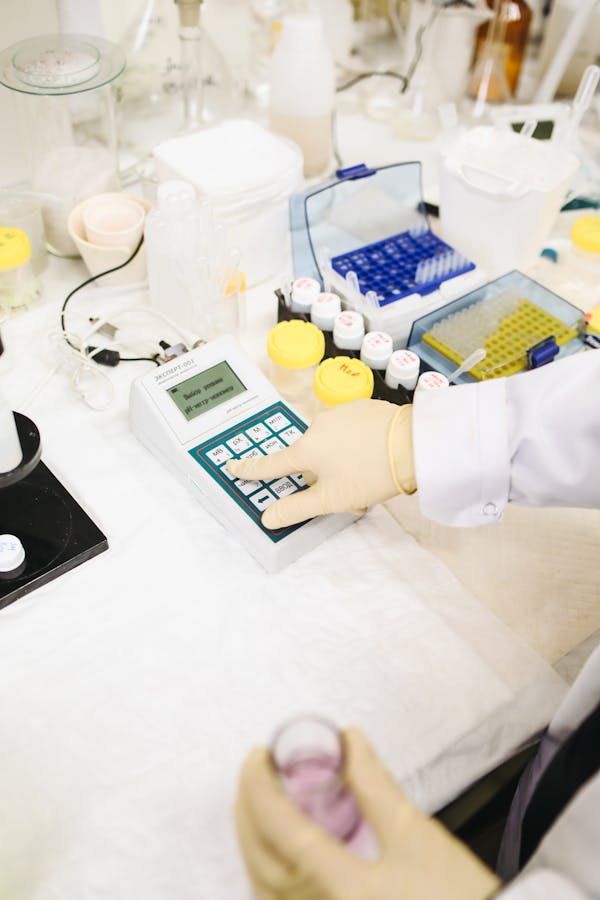
2. Anatomy of a Serial Dilution Calculation Table
A complete serial dilution calculation table contains specific columns that map the entire protocol from start to finish. Understanding each column is essential before you attempt to build or use one.
The Standard Columns
- Step Number (n): The sequential identifier for each dilution step. Step 0 is your stock solution. Step 1 is the first dilution. The serial dilution calculation table typically runs from Step 0 to Step N, where N is determined by your assay requirements.
- Source Tube: Identifies where the aliquot is taken from. In Step 1, the source is the Stock. In Step 2, the source is Tube 1, and so on. This chain of custody within the serial dilution calculation table ensures traceability.
- Transfer Volume ($V_t$): The volume of liquid physically moved from one tube to the next. This is calculated as $V_t = V_{total} / DF$.
- Diluent Volume ($V_d$): The volume of blank solvent (buffer, water, media) pre-loaded into each receiving tube. $V_d = V_{total} – V_t$.
- Total Volume ($V_{total}$): The final volume in each tube after mixing. This should be identical across all tubes for assay consistency.
- Dilution Factor (DF): The fold-reduction per step. A DF of 10 means concentration drops by 10x at each step.
- Resulting Concentration ($C_n$): The actual concentration after dilution. This is the most critical output of the serial dilution calculation table.
- Cumulative Dilution: The total dilution from the original stock. After 3 steps of 10-fold dilution, the cumulative dilution is $10^3 = 1000$.
Pro Tip: Pre-fill Before You Pipette
The best practice is to complete the entire serial dilution calculation table on paper or digitally BEFORE entering the laboratory. Pre-fill all receiving tubes with the calculated diluent volume. Then, and only then, begin the sequential transfer. This two-phase approach (preparation → execution) reduces multitasking errors by 70%, according to studies published in the Journal of Laboratory Automation (PubMed).
3. The Mathematics Behind Every Row of the Table
Each row of a serial dilution calculation table is governed by a simple geometric progression formula. Understanding this math allows you to verify any table, whether generated manually, by a colleague, or by automated software.
The Master Formula
Where $C_n$ is the concentration at step $n$, $C_0$ is the initial stock concentration, and $DF$ is the dilution factor per step. This formula populates the “Resulting Concentration” column of your serial dilution calculation table.
Volume Formulas
These two equations populate the “Transfer Volume” and “Diluent Volume” columns of the serial dilution calculation table. They remain constant across all rows (assuming a constant DF), which is why serial dilutions are elegant—once you know the ratio, the mechanics are repetitive and predictable.
Worked Example: Building a Table Manually
Given: $C_0 = 100 \text{ µg/mL}$, $DF = 10$, $V_{total} = 1000 \text{ µL}$, Steps = 6.
$V_t = 1000/10 = 100 \text{ µL}$, $V_d = 1000 – 100 = 900 \text{ µL}$.
| Step | Source | Transfer (µL) | Diluent (µL) | Total (µL) | Concentration (µg/mL) | Cumulative Dilution |
|---|---|---|---|---|---|---|
| 0 (Stock) | — | — | — | — | 100 | 1:1 |
| 1 | Stock | 100 | 900 | 1000 | 10 | 1:10 |
| 2 | Tube 1 | 100 | 900 | 1000 | 1 | 1:100 |
| 3 | Tube 2 | 100 | 900 | 1000 | 0.1 | 1:1,000 |
| 4 | Tube 3 | 100 | 900 | 1000 | 0.01 | 1:10,000 |
| 5 | Tube 4 | 100 | 900 | 1000 | 0.001 | 1:100,000 |
| 6 | Tube 5 | 100 | 900 | 1000 | 0.0001 | 1:1,000,000 |
This is a standard 10-fold serial dilution calculation table covering six orders of magnitude. Notice how every row uses identical volumes (100 µL transfer, 900 µL diluent), making the physical execution perfectly repetitive. This is the elegance of the serial approach—and the reason the serial dilution calculation table is a cornerstone of laboratory science.

Serial Dilution Calculation Table Generator
Enter your parameters and instantly generate a printable, protocol-ready table.
Your Serial Dilution Calculation Table
Transfer Volume: — µL per step
Diluent Volume: — µL per tube
Dilution Factor: 1:— per step
| Step | Source | Transfer (µL) | Diluent (µL) | Total (µL) | Concentration | Cumulative Dilution |
|---|
Tip: Use Ctrl+P to print this serial dilution calculation table for your lab notebook.
5. 2-Fold Serial Dilution Calculation Table (Complete Worked Example)
The 2-fold (or doubling) dilution is the gold standard for immunoassays, MIC testing, and antibody titrations. In this serial dilution calculation table, the concentration halves at every step.
Parameters: $C_0 = 64 \text{ µg/mL}$, $DF = 2$, $V_{total} = 200 \text{ µL}$, Steps = 8.
$V_t = 200/2 = 100 \text{ µL}$, $V_d = 200-100 = 100 \text{ µL}$.
| Step | Source | Transfer | Diluent | Concentration (µg/mL) | Cumulative |
|---|---|---|---|---|---|
| 0 | Stock | — | — | 64 | 1:1 |
| 1 | Stock | 100 µL | 100 µL | 32 | 1:2 |
| 2 | Tube 1 | 100 µL | 100 µL | 16 | 1:4 |
| 3 | Tube 2 | 100 µL | 100 µL | 8 | 1:8 |
| 4 | Tube 3 | 100 µL | 100 µL | 4 | 1:16 |
| 5 | Tube 4 | 100 µL | 100 µL | 2 | 1:32 |
| 6 | Tube 5 | 100 µL | 100 µL | 1 | 1:64 |
| 7 | Tube 6 | 100 µL | 100 µL | 0.5 | 1:128 |
| 8 | Tube 7 | 100 µL | 100 µL | 0.25 | 1:256 |
This 2-fold serial dilution calculation table is specifically designed for Minimum Inhibitory Concentration (MIC) testing in microbiology. The MIC is the lowest concentration at which bacterial growth is visibly inhibited. By using a serial dilution calculation table with 2-fold steps, you ensure precise, evenly-spaced concentrations on a logarithmic scale, enabling reliable identification of the MIC endpoint.
6. 10-Fold Serial Dilution Calculation Table (Complete Worked Example)
The 10-fold (or log-scale) dilution is standard in microbiology for viable cell counts and in virology for plaque assays. This serial dilution calculation table spans enormous concentration ranges efficiently.
Parameters: $C_0 = 5 \times 10^8 \text{ CFU/mL}$, $DF = 10$, $V_{total} = 1000 \text{ µL}$, Steps = 7.
| Step | Transfer | Diluent | Concentration (CFU/mL) | Cumulative | Plate This? |
|---|---|---|---|---|---|
| 0 | — | — | 5 × 10⁸ | 1:1 | No (TNTC) |
| 1 | 100 µL | 900 µL | 5 × 10⁷ | 1:10 | No |
| 2 | 100 µL | 900 µL | 5 × 10⁶ | 1:100 | No |
| 3 | 100 µL | 900 µL | 5 × 10⁵ | 1:1,000 | No |
| 4 | 100 µL | 900 µL | 5 × 10⁴ | 1:10,000 | Maybe |
| 5 | 100 µL | 900 µL | 5 × 10³ | 1:100,000 | Yes ✓ |
| 6 | 100 µL | 900 µL | 5 × 10² | 1:1,000,000 | Yes ✓ |
| 7 | 100 µL | 900 µL | 5 × 10¹ | 1:10,000,000 | Yes ✓ |
The “Plate This?” column demonstrates a real-world extension of the serial dilution calculation table. Countable colonies (30-300 per plate) are expected at steps 5-7. Steps 1-3 would produce “Too Numerous To Count” (TNTC) results and are therefore not plated. The serial dilution calculation table tells you in advance which dilutions are worth plating, saving time and agar.
7. Custom Ratio Tables (3-Fold, 5-Fold, and Non-Standard)
While 2-fold and 10-fold dilutions are most common, many applications require custom dilution factors. The serial dilution calculation table framework works identically regardless of the ratio.
5-Fold Dilution Example
Application: ELISA standard curves often use 5-fold dilutions to cover a wider dynamic range with fewer wells.
$V_t = 1000/5 = 200 \text{ µL}$, $V_d = 800 \text{ µL}$.
Starting at 1000 ng/mL: 200, 40, 8, 1.6, 0.32 ng/mL.
These non-standard serial dilution calculation table formats are particularly useful in dose-response curve fitting, where the 4-Parameter Logistic (4PL) model requires concentration points spread across the sigmoidal transition region. Using a dilution calculator automates the math for non-integer factors like 3.16 (half-log).
8. Real-World Scenarios: Where the Table Saves the Day
Scenario #1 — COVID-19 RT-qPCR Standard Curve
During the pandemic, diagnostic labs worldwide relied on RT-qPCR to detect SARS-CoV-2 RNA. To calculate PCR efficiency and set the Limit of Detection (LoD), they needed a standard curve. A synthetic RNA standard at $10^6$ copies/µL was diluted in a 10-fold series down to $10^0$ (1 copy/µL).
The serial dilution calculation table for this qPCR standard contained 7 rows. Each row represented one log-drop. The table was attached to the batch validation record as proof that the standard curve was prepared correctly. Without this serial dilution calculation table, the lab would not pass CDC audit requirements for emergency use authorization.
Scenario #2 — Antibiotic MIC Testing (CLSI Standard)
A pharmaceutical QC lab tests a new batch of vancomycin. The Clinical and Laboratory Standards Institute (CLSI) mandates a 2-fold serial dilution calculation table starting from 128 µg/mL down to 0.06 µg/mL—a total of 11 dilution steps across a 96-well microplate. Each row of the table maps to one well. The MIC is read as the lowest concentration that prevents visible bacterial growth.
If the serial dilution calculation table contains an error at Step 4 (e.g., wrong transfer volume), then every subsequent well is wrong. The reported MIC shifts by 2x or more, potentially leading to incorrect dosing recommendations and patient harm. This is why the CLSI requires that the serial dilution calculation table be verified independently before execution.
Scenario #3 — Environmental Water Testing (EPA Method)
An environmental laboratory tests lake water for coliform bacteria using the EPA membrane filtration method. The water sample is diluted 10-fold across 5 steps. The serial dilution calculation table documents that 1 mL of sample was added to 9 mL of sterile saline at each step, creating dilutions from $10^{-1}$ to $10^{-5}$. Each dilution is filtered, and the membranes are placed on selective media.
The serial dilution calculation table is submitted alongside the results to the state environmental agency as proof of methodology. If the table is missing or inconsistent, the results are rejected and the test must be repeated—at the lab’s expense.
Scenario #4 — Protein ELISA Standard Curve
An immunologist prepares a 7-point standard curve for an IL-6 ELISA. The top standard is 500 pg/mL, and a 2-fold serial dilution calculation table generates points at 500, 250, 125, 62.5, 31.25, 15.625, and 7.8125 pg/mL. Each concentration must fall within the linear range of the 4PL curve. A well-constructed serial dilution calculation table ensures even spacing on the log axis, producing a symmetrical sigmoid that yields accurate sample quantification.

9. Error Propagation Across Table Rows
The Achilles heel of serial dilution is error compounding. Because each step feeds the next, an error in Step 1 multiplies through every subsequent row of the serial dilution calculation table.
Quantifying the Error
If your pipette has a 2% systematic error (e.g., delivers 98 µL instead of 100 µL), the error after $n$ steps is:
For $e = 0.02$ (2%) and $n = 10$ steps: $(1.02)^{10} – 1 = 21.9\%$ total deviation. This means the last row of your serial dilution calculation table is off by nearly 22%—even though each individual step had only a 2% error.
Mitigation Strategies
- Calibrate Pipettes: Annually, per ISO 8655. This is the single most effective way to ensure your serial dilution calculation table matches reality.
- Use Larger Volumes: Pipetting 500 µL has lower relative error than 5 µL. Design your serial dilution calculation table with volumes ≥100 µL wherever possible.
- Change Tips: External carryover introduces systematic positive bias. Always change tips between every row of the serial dilution calculation table.
- Verify with Standards: Include known standards alongside your samples. If the standard values deviate from expected, recalibrate and repeat.
10. Reading Results From Your Serial Dilution Calculation Table
The serial dilution calculation table is not just for preparation—it is essential for back-calculating results.
The Back-Calculation Formula
If you count 45 colonies on a plate from Step 5 of your serial dilution calculation table (cumulative dilution = $10^5$), and you plated 0.1 mL, then:
Original CFU/mL = $(45 / 0.1) \times 10^5 = 4.5 \times 10^7$ CFU/mL.
Without the serial dilution calculation table, this back-calculation is impossible because you do not know which dilution factor applies to which plate. The table is your decoder ring for translating raw counts into meaningful concentrations.
11. Automation & Digital Integration of the Table
In modern high-throughput laboratories, the serial dilution calculation table is not handwritten—it is digitally generated and fed directly into liquid handling robots. Systems like Hamilton STAR, Tecan EVO, and Beckman Biomek accept input files that are essentially digital versions of the serial dilution calculation table. Each row becomes a robotic command: aspirate X µL from position A, dispense into position B.
However, garbage in equals garbage out. If the human operator inputs incorrect values into the serial dilution calculation table template, the robot will precisely execute the wrong protocol 384 times across an entire microplate. This is why validation tools like our dilution calculator are indispensable—they provide a double-check against the robotic input file.
Critical Note on LIMS Integration
Many laboratories use a Laboratory Information Management System (LIMS) to track sample processing. The serial dilution calculation table should be stored within the LIMS as an attachment to the sample record. This creates an auditable, timestamped chain of evidence linking the raw data to the dilution protocol used—a requirement for ISO 17025 accreditation.
12. Integrated Digital Laboratory Ecosystem
Building a serial dilution calculation table is one step in a larger laboratory workflow. These complementary tools ensure end-to-end accuracy:
- General Dilution Calculator:
Verify single-step dilutions (C₁V₁=C₂V₂) before incorporating into your serial dilution calculation table. Open Tool - Peptide Reconstitution Calculator:
Calculate the solvent volume for lyophilized peptide standards used in ELISA curves. Open Tool - Molarity & Dilution Calculator:
Convert mass to molarity to ensure the $C_0$ input for your serial dilution calculation table is accurate. Open Tool - Serial Dilution Calculator:
The companion tool that generates the mathematical backbone of any serial dilution calculation table. Open Tool
13. Troubleshooting Common Serial Dilution Calculation Table Errors
Diagnostic Guide for Table-Related Failures
- Problem: Standard curve $R^2$ is below 0.95.
Root Cause: The serial dilution calculation table was executed correctly, but a pipetting error occurred at one or more steps.
Fix: Identify the outlier point. Reprepare that specific dilution. Alternatively, increase volumes in the serial dilution calculation table to reduce relative error. - Problem: All wells in MIC test show growth.
Root Cause: The starting concentration ($C_0$) was too low. The serial dilution calculation table produced concentrations that never reached the inhibitory threshold.
Fix: Increase $C_0$ by at least 4-fold and regenerate the table. - Problem: Plate counts at different dilutions don’t agree (>2x variance).
Root Cause: Poor mixing between steps.
Fix: Vortex each tube for 5 seconds before pipetting. Your serial dilution calculation table should include a “Mix” instruction column. - Problem: The robot dispensed incorrect volumes.
Root Cause: The digital input file had columns swapped.
Fix: Always verify the input file against a manually checked reference. Use the dilution calculator as the gold-standard reference.

14. Extensive FAQs About the Serial Dilution Calculation Table
A serial dilution calculation table is a structured document that lists every step of a serial dilution protocol in row-by-row format. Each row contains the step number, source tube, transfer volume, diluent volume, resulting concentration, and cumulative dilution factor. It serves as both a planning document and an execution checklist.
The number of rows depends on the concentration range you need to cover. For ELISA standard curves, 7-8 rows are typical. For microbial plate counts, 5-7 rows suffice. For qPCR standard curves, 6-7 rows (covering $10^6$ to $10^0$) are standard. The serial dilution calculation table generator tool lets you specify any number of steps.
Yes, but this is uncommon and introduces complexity. A “non-uniform” serial dilution calculation table might use 10-fold dilution for the first 3 steps and 2-fold for the remaining steps. Each row would have different transfer and diluent volumes.
Absolutely. A blank (diluent only, no sample) is essential for baseline subtraction in spectrophotometric assays. Add a final row to your serial dilution calculation table labeled “Blank” with $C_n = 0$. This is mandatory for ELISA, Bradford assays, and any absorbance-based measurement.
Three verification methods: (1) Check that $C_{n} = C_{n-1} / DF$ for every row. (2) Verify that the last row’s cumulative dilution equals $DF^n$. (3) Use the online dilution calculator to regenerate the table independently and compare.
The serial dilution calculation table is unit-agnostic. Use whatever unit is appropriate for your assay: µg/mL for drug concentrations, CFU/mL for bacteria, copies/µL for DNA, pg/mL for cytokines, or Molar (M) for chemical solutions.
Liquid adheres to the outside of pipette tips. If you reuse a tip, you carry over a small volume of the previous (higher) concentration into the next tube. This systematically inflates every subsequent row of the serial dilution calculation table, destroying the expected geometric progression. Always use fresh tips.
Typically, no. The serial dilution is inherently a forward process (concentrated → dilute). However, some protocols use a “spike” approach, where you start with blank and add increasing amounts of stock. This is a parallel dilution, not a serial dilution, and requires a different type of calculation table.
A “dilution scheme” is a visual diagram showing the flow of liquid from tube to tube (often with arrows). A serial dilution calculation table is the numerical companion that specifies exact volumes and concentrations. Ideally, both should accompany your lab notebook entry.
In a 96-well plate, each column (or row) corresponds to one step in the serial dilution calculation table. A 2-fold dilution across 12 columns covers a 4096-fold range (2¹² = 4096). Multichannel pipettes allow 8 replicates simultaneously. The table maps each column to a specific concentration.
If the serial dilution calculation table requires transferring less than 1 µL, the relative error becomes unacceptably large. Solution: increase the total volume ($V_{total}$) proportionally. For example, if $DF = 100$ and $V_{total} = 100$ µL, then $V_t = 1$ µL (too small). Instead, use $V_{total} = 1000$ µL, making $V_t = 10$ µL—a much more accurate pipetting volume.
Yes, in GLP/GMP environments. The FDA, EMA, and ICH Q2(R1) guidelines require that all analytical methods include documented evidence of standard preparation. The serial dilution calculation table serves as this evidence. Digital tables generated by validated software (like our calculator tool) are accepted as electronic records under 21 CFR Part 11 if properly validated.
15. Conclusion: The Table Is the Experiment
In laboratory science, the serial dilution calculation table is not an afterthought—it is the experiment’s blueprint. It is the document that transforms a vague intention (“I need to dilute this”) into a precise, repeatable, auditable protocol. Every row is a commitment to accuracy. Every column is a safeguard against error. Every cell in the table represents a physical action that will determine whether your data is publishable or worthless.
We have covered the mathematics that populate the serial dilution calculation table, the standard 2-fold and 10-fold formats, custom ratios for specialized assays, real-world scenarios from virology to environmental science, the physics of error propagation, and the digital tools that generate these tables automatically. The knowledge in this guide empowers you to build a serial dilution calculation table for any application, verify it rigorously, and execute it with confidence.
The next time you approach a bench, do not pipette from memory. Do not trust mental math performed under time pressure. Generate your serial dilution calculation table digitally using our free dilution calculator, print it, tape it to your fume hood, and follow it step by step. Your future self—and your data—will thank you.
Generate Your Table Now
Stop calculating manually. Build an error-free serial dilution calculation table in seconds.
Use Dilution Calculator