
how to dilute omnia 2.0 interior cleaner — Ratio Guide, Bottle Mixing Calculator, Product Volume & Safe Interior Cleaning Dilution
If you are searching how to dilute omnia 2.0 interior cleaner, the safest answer is: follow the dilution ratio printed on the Omnia 2.0 product label or supplier instructions first. If the label allows dilution, use the standard ratio formula: product volume = final bottle volume ÷ total parts. For a 1:10 dilution, mix 1 part cleaner with 10 parts water, which means 11 total parts. For a 1:5 dilution, mix 1 part cleaner with 5 parts water, which means 6 total parts. This calculator helps convert any approved ratio into exact millilitres, ounces, bottle sizes, batch volumes, and final concentrate percentage.
Key facts at a glance
- Always check label: product-specific instructions override any general calculator.
- Ratio meaning: 1:10 usually means 1 part cleaner plus 10 parts water.
- Total parts: product parts + water parts.
- Product volume: final volume ÷ total parts when product part is 1.
- Water volume: final volume − product volume.
- Best practice: use clean water, label the bottle, test a hidden area, and avoid mixing with other chemicals.
📋 Table of Contents
▼
- What This Dilution Calculator Does
- Omnia 2.0 Interior Cleaner Dilution Calculator
- How Interior Cleaner Dilution Ratios Work
- Common Bottle and Batch Examples
- Common Dilution Mistakes
- Interior Cleaner Safety & Surface Care
- Which Mode Fits Your Workflow
- Frequently Asked Questions
- Dilution Preparation Checklist
- Trusted Reference Resources
- User Reviews & Ratings
What This Dilution Calculator Does
This page answers the practical question how to dilute omnia 2.0 interior cleaner with a ratio calculator, bottle mixing guide, safety notes, interior surface reminders, and batch examples. Interior cleaners are often diluted according to soil level and surface sensitivity, but the correct ratio depends on the product label. Some cleaners are ready to use, some are concentrates, and some have different ratios for light cleaning, general interior cleaning, heavy grime, fabric, plastic, vinyl, leatherette, rubber mats, and spot treatment.
The how to dilute omnia 2.0 interior cleaner workflow is mainly a ratio problem. A ratio such as 1:10 means one part product and ten parts water. A 500 mL bottle at 1:10 has 11 total parts, so product volume is 500 ÷ 11 = 45.45 mL, and water volume is 454.55 mL. If a label instead uses “1 part product to 4 parts water,” the total parts are 5. The calculator below lets you enter the ratio and bottle volume so you do not have to do the arithmetic manually.
Use this guide for how to dilute omnia 2.0 interior cleaner as a planning aid, not as a replacement for the manufacturer label. If Omnia 2.0 Interior Cleaner instructions specify exact ratios, dwell time, surface restrictions, or ready-to-use application, follow those instructions. If the label says not to dilute, do not dilute. If the product is used on delicate leather, screens, piano black trim, Alcantara, suede-like material, unsealed surfaces, or dyed fabrics, test a hidden area first and avoid over-wetting.
This page keeps the same three-part WordPress pattern as the previous calculators: Part 1 includes the top content and CSS, Part 2 contains the PHP shortcode calculator and review handler, and Part 3 includes the full guide, FAQ, reviews, sidebar, and schema. The content is focused on safe, label-led interior cleaner dilution and clear measurement rather than unsupported product claims.
Omnia 2.0 Interior Cleaner Dilution Calculator
Convert approved label ratios into exact product and water volumes for bottles, batches, ounces, millilitres, and final concentrate percentage.
Calculation Result
Step-by-step working
How Interior Cleaner Dilution Ratios Work
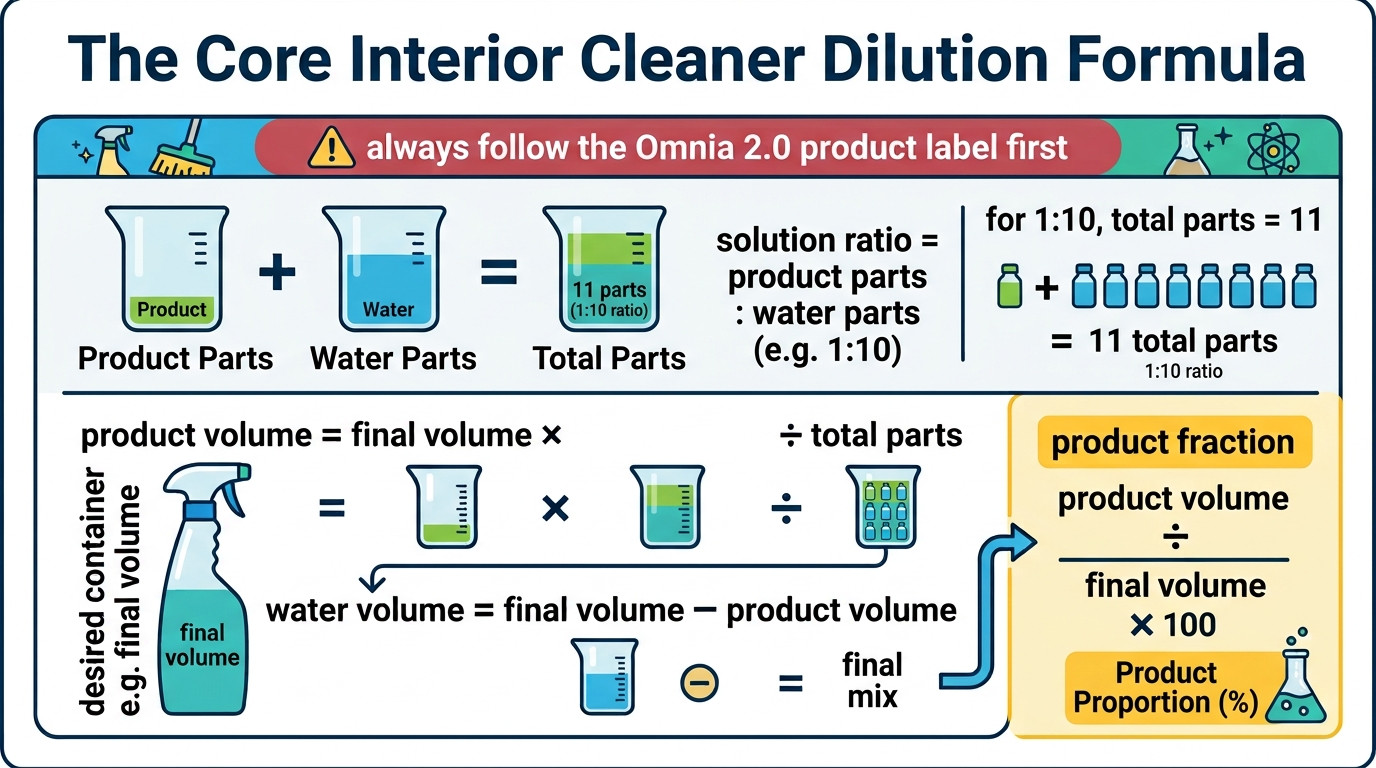
The key to how to dilute omnia 2.0 interior cleaner is understanding the ratio printed on the label. A ratio such as 1:10 normally means one part cleaner and ten parts water. That is eleven total parts, not ten total parts. Product volume is final bottle volume divided by eleven when the product part is one. Water volume is the rest of the bottle. This distinction prevents over-strong or under-strong mixtures.
If the product label gives several ratios, choose the one that matches the soil level and surface type. Light dust on plastic may need a weaker mix than greasy door panels or rubber mats. However, a stronger mix is not always better. With interior cleaners, too much concentrate can leave residue, increase odor, affect sensitive surfaces, or require more rinsing. The safest approach for how to dilute omnia 2.0 interior cleaner is to start with the manufacturer’s mildest recommended ratio for the job and test in an inconspicuous area.
Ratio Versus Percentage
Ratios and percentages describe the same dilution in different ways. In a 1:10 dilution, one part product is present in eleven total parts, so the product fraction is about 9.09%. If the concentrate is considered 100% of its bottle strength, the prepared mix is 9.09% of that concentrate strength. A how to dilute omnia 2.0 interior cleaner calculation can convert a ratio into exact product percentage for documentation or comparison.
Bottle Size Calculations
For how to dilute omnia 2.0 interior cleaner, bottle size matters because a 500 mL bottle and a 32 oz bottle use different product amounts. For a 500 mL bottle at 1:10, product is 45.45 mL and water is 454.55 mL. For a 16 oz bottle at 1:10, product is 1.45 oz and water is 14.55 oz. The calculator handles both millilitres and ounces so detailers can work with the bottles they actually use.
Water First or Product First
Many cleaning workflows add water first and concentrate second to reduce foaming and splashing, but the product label should control the order. For how to dilute omnia 2.0 interior cleaner, measuring accurately is more important than the order itself. If the bottle has graduations, add water close to the target level, add product carefully, then top up if needed. Do not overfill spray bottles because headspace helps mixing and sprayer function.
Surface Compatibility
Interior cleaners may touch plastics, vinyl, rubber, fabric, carpet, leatherette, coated leather, touch screens, glossy trim, and painted buttons. A how to dilute omnia 2.0 interior cleaner ratio can be mathematically correct but still too strong for a delicate surface if the label warns against that use. Always test a hidden area, use a soft towel or brush, avoid soaking electronics, and wipe residues as directed.
Why Labeling Matters
After how to dilute omnia 2.0 interior cleaner, the diluted bottle should be labeled with product name, ratio, date, and intended use. A clear label prevents accidental use of a strong mix on a delicate surface and helps a shop maintain consistent cleaning results. If multiple bottles are mixed at different ratios, use color-coded labels or write the exact ratio in large text.
water volume = final volume − product volume
for 1:10, total parts = 11
product fraction = product volume ÷ final volume × 100
always follow the Omnia 2.0 product label first
Remember: how to dilute omnia 2.0 interior cleaner is a ratio calculation. It does not override product label directions, surface warnings, or professional detailing judgment.
Common Bottle and Batch Examples
Example 1: 500 mL Bottle at 1:10
For how to dilute omnia 2.0 interior cleaner in a 500 mL bottle at 1:10, divide 500 by 11. Use 45.45 mL cleaner and 454.55 mL water. Label the bottle with product name, ratio, and date.
Example 2: 32 oz Spray Bottle
For a 32 oz bottle at 1:10, use 32 ÷ 11 = 2.91 oz cleaner and 29.09 oz water. The same how to dilute omnia 2.0 interior cleaner ratio applies whether the bottle is measured in ounces or millilitres.
Example 3: Stronger 1:4 Mix
If the product label allows 1:4 for heavier cleaning, a 500 mL bottle needs 100 mL cleaner and 400 mL water. For how to dilute omnia 2.0 interior cleaner, stronger ratios should be reserved for surfaces and soil levels approved by the label.
Example 4: Light 1:20 Mix
A light maintenance mix at 1:20 in a 500 mL bottle uses 23.81 mL product and 476.19 mL water. This example shows how how to dilute omnia 2.0 interior cleaner can reduce product use when the label allows lighter cleaning.
Example 5: Four Bottle Batch
Four 500 mL bottles at 1:10 require 2,000 mL total mixture. Product is 2,000 ÷ 11 = 181.82 mL and water is 1,818.18 mL. Batch mode makes how to dilute omnia 2.0 interior cleaner easier for detail shops.
Example 6: Reverse Ratio Check
If a bottle has 50 mL product and 450 mL water, the actual ratio is 1:9 because 450 ÷ 50 = 9. This reverse check helps verify how to dilute omnia 2.0 interior cleaner when a bottle was already mixed.

Common Dilution Mistakes
Mistake 1: Misreading 1:10
The most common how to dilute omnia 2.0 interior cleaner mistake is treating 1:10 as ten total parts. Usually it means one part product plus ten parts water, which is eleven total parts.
Mistake 2: Ignoring the Product Label
A calculator cannot know every product warning or surface restriction. For how to dilute omnia 2.0 interior cleaner, the label, SDS, and supplier guidance should always come before internet ratio examples.
Mistake 3: Using Too Strong a Mix on Delicate Surfaces
A strong mix may work faster but can leave residue or affect sensitive surfaces. The how to dilute omnia 2.0 interior cleaner ratio should be matched to material type, soil level, and label guidance.
Mistake 4: Not Testing a Hidden Area
Interior materials vary by vehicle, age, coating, dye, and previous dressing. Before applying a diluted cleaner broadly, test the how to dilute omnia 2.0 interior cleaner mix in a hidden area.
Mistake 5: Mixing with Other Chemicals
Do not mix interior cleaner with bleach, ammonia, acids, solvents, or other detailing chemicals. A how to dilute omnia 2.0 interior cleaner calculation is for water dilution only.
Mistake 6: Leaving Bottles Unlabeled
A bottle without ratio and date can lead to inconsistent results. After how to dilute omnia 2.0 interior cleaner, label immediately so the mix is not confused with a stronger or weaker bottle.
💡 Rule of Thumb: for how to dilute omnia 2.0 interior cleaner, read the label first, calculate total parts correctly, test a hidden area, and label the bottle with the exact ratio.
Interior Cleaner Safety & Surface Care
Safety: how to dilute omnia 2.0 interior cleaner involves a cleaning chemical. Avoid eye contact, prolonged skin contact, inhaling spray mist, and mixing with other chemicals. Follow the product label and safety data sheet for PPE, ventilation, storage, and first-aid instructions.
- Use label-approved ratios and avoid guessing on delicate surfaces.
- Wear gloves and eye protection if the product label recommends them or if spraying overhead.
- Do not spray electronics directly; apply to a towel when cleaning screens, buttons, vents, or controls.
- Test a hidden area before cleaning leather, coated trim, fabric, Alcantara-style material, or dyed surfaces.
- Do not mix chemicals because incompatible products can produce fumes or damage surfaces.
- Store labeled bottles away from children, pets, heat, and direct sunlight.
For how to dilute omnia 2.0 interior cleaner, water quality and bottle cleanliness also matter. Use clean water and a clean spray bottle. If the bottle previously held another chemical, rinse it thoroughly or use a new bottle to prevent residues from changing the cleaner performance. Do not store diluted product in food or drink containers.
Which Mode Fits Your Workflow
| Mode | Use Case | Key Formula | Inputs | Output |
|---|---|---|---|---|
| Ratio Bottle | Mix one bottle | final × product parts / total parts | parts and final volume | product + water |
| Batch Scale | Multiple bottles | bottles × volume | count, bottle size, ratio | total product + water |
| Final Percent | Check concentrate fraction | product/total × strength | product, water, strength | final percent |
| Ounces Bottle | US bottle sizes | oz × product parts / total parts | oz and ratio | oz product + water |
| Reverse Check | Verify mixed bottle | water/product | product and water volumes | actual ratio |
General Interior Cleaning
For general cleaning, how to dilute omnia 2.0 interior cleaner should start with the product label ratio for ordinary interior surfaces. Use a microfiber towel, avoid soaking seams and electronics, and wipe residue as directed.
Heavy Soil or Grease
If the label allows a stronger ratio for heavy soil, the calculator can scale that mix. Stronger how to dilute omnia 2.0 interior cleaner mixtures should be used carefully and followed by wiping or rinsing if the product instructions require it.
Fabric and Carpet
Fabric, carpet, and mats may hold cleaner and moisture. Use the how to dilute omnia 2.0 interior cleaner ratio approved for textile work, avoid over-wetting, and extract or wipe as needed according to the surface and product instructions.
Sensitive Trim
Glossy trim, screens, coated leather, and delicate materials should be treated cautiously. For how to dilute omnia 2.0 interior cleaner, a lighter mix and towel application may be safer than direct spraying, but the product label controls actual use.
Advanced Guide to Omnia 2.0 Interior Cleaner Dilution
Label Directions
how to dilute omnia 2.0 interior cleaner requires attention to label directions, not only the numerical ratio. Label Directions matters because interior cleaning combines chemistry, surface sensitivity, soil level, and user technique. A good bottle record should include product name, ratio, date mixed, water type, bottle size, intended use, and any surface restrictions. If cleaning results are streaky, sticky, too wet, or inconsistent, check whether the ratio was measured correctly, whether the surface was over-sprayed, whether residue was wiped away, and whether the product label recommends a different approach. Consistent dilution records help a detailer repeat good results and avoid accidental strong mixes.
Ratio Notation
how to dilute omnia 2.0 interior cleaner requires attention to ratio notation, not only the numerical ratio. Ratio Notation matters because interior cleaning combines chemistry, surface sensitivity, soil level, and user technique. A good bottle record should include product name, ratio, date mixed, water type, bottle size, intended use, and any surface restrictions. If cleaning results are streaky, sticky, too wet, or inconsistent, check whether the ratio was measured correctly, whether the surface was over-sprayed, whether residue was wiped away, and whether the product label recommends a different approach. Consistent dilution records help a detailer repeat good results and avoid accidental strong mixes.
Bottle Size
how to dilute omnia 2.0 interior cleaner requires attention to bottle size, not only the numerical ratio. Bottle Size matters because interior cleaning combines chemistry, surface sensitivity, soil level, and user technique. A good bottle record should include product name, ratio, date mixed, water type, bottle size, intended use, and any surface restrictions. If cleaning results are streaky, sticky, too wet, or inconsistent, check whether the ratio was measured correctly, whether the surface was over-sprayed, whether residue was wiped away, and whether the product label recommends a different approach. Consistent dilution records help a detailer repeat good results and avoid accidental strong mixes.
Metric Volumes
how to dilute omnia 2.0 interior cleaner requires attention to metric volumes, not only the numerical ratio. Metric Volumes matters because interior cleaning combines chemistry, surface sensitivity, soil level, and user technique. A good bottle record should include product name, ratio, date mixed, water type, bottle size, intended use, and any surface restrictions. If cleaning results are streaky, sticky, too wet, or inconsistent, check whether the ratio was measured correctly, whether the surface was over-sprayed, whether residue was wiped away, and whether the product label recommends a different approach. Consistent dilution records help a detailer repeat good results and avoid accidental strong mixes.
Ounce Volumes
how to dilute omnia 2.0 interior cleaner requires attention to ounce volumes, not only the numerical ratio. Ounce Volumes matters because interior cleaning combines chemistry, surface sensitivity, soil level, and user technique. A good bottle record should include product name, ratio, date mixed, water type, bottle size, intended use, and any surface restrictions. If cleaning results are streaky, sticky, too wet, or inconsistent, check whether the ratio was measured correctly, whether the surface was over-sprayed, whether residue was wiped away, and whether the product label recommends a different approach. Consistent dilution records help a detailer repeat good results and avoid accidental strong mixes.
Water Quality
how to dilute omnia 2.0 interior cleaner requires attention to water quality, not only the numerical ratio. Water Quality matters because interior cleaning combines chemistry, surface sensitivity, soil level, and user technique. A good bottle record should include product name, ratio, date mixed, water type, bottle size, intended use, and any surface restrictions. If cleaning results are streaky, sticky, too wet, or inconsistent, check whether the ratio was measured correctly, whether the surface was over-sprayed, whether residue was wiped away, and whether the product label recommends a different approach. Consistent dilution records help a detailer repeat good results and avoid accidental strong mixes.
Spray Bottle Cleanliness
how to dilute omnia 2.0 interior cleaner requires attention to spray bottle cleanliness, not only the numerical ratio. Spray Bottle Cleanliness matters because interior cleaning combines chemistry, surface sensitivity, soil level, and user technique. A good bottle record should include product name, ratio, date mixed, water type, bottle size, intended use, and any surface restrictions. If cleaning results are streaky, sticky, too wet, or inconsistent, check whether the ratio was measured correctly, whether the surface was over-sprayed, whether residue was wiped away, and whether the product label recommends a different approach. Consistent dilution records help a detailer repeat good results and avoid accidental strong mixes.
Labeling
how to dilute omnia 2.0 interior cleaner requires attention to labeling, not only the numerical ratio. Labeling matters because interior cleaning combines chemistry, surface sensitivity, soil level, and user technique. A good bottle record should include product name, ratio, date mixed, water type, bottle size, intended use, and any surface restrictions. If cleaning results are streaky, sticky, too wet, or inconsistent, check whether the ratio was measured correctly, whether the surface was over-sprayed, whether residue was wiped away, and whether the product label recommends a different approach. Consistent dilution records help a detailer repeat good results and avoid accidental strong mixes.
Surface Testing
how to dilute omnia 2.0 interior cleaner requires attention to surface testing, not only the numerical ratio. Surface Testing matters because interior cleaning combines chemistry, surface sensitivity, soil level, and user technique. A good bottle record should include product name, ratio, date mixed, water type, bottle size, intended use, and any surface restrictions. If cleaning results are streaky, sticky, too wet, or inconsistent, check whether the ratio was measured correctly, whether the surface was over-sprayed, whether residue was wiped away, and whether the product label recommends a different approach. Consistent dilution records help a detailer repeat good results and avoid accidental strong mixes.
Leather Care
how to dilute omnia 2.0 interior cleaner requires attention to leather care, not only the numerical ratio. Leather Care matters because interior cleaning combines chemistry, surface sensitivity, soil level, and user technique. A good bottle record should include product name, ratio, date mixed, water type, bottle size, intended use, and any surface restrictions. If cleaning results are streaky, sticky, too wet, or inconsistent, check whether the ratio was measured correctly, whether the surface was over-sprayed, whether residue was wiped away, and whether the product label recommends a different approach. Consistent dilution records help a detailer repeat good results and avoid accidental strong mixes.
Plastic Trim
how to dilute omnia 2.0 interior cleaner requires attention to plastic trim, not only the numerical ratio. Plastic Trim matters because interior cleaning combines chemistry, surface sensitivity, soil level, and user technique. A good bottle record should include product name, ratio, date mixed, water type, bottle size, intended use, and any surface restrictions. If cleaning results are streaky, sticky, too wet, or inconsistent, check whether the ratio was measured correctly, whether the surface was over-sprayed, whether residue was wiped away, and whether the product label recommends a different approach. Consistent dilution records help a detailer repeat good results and avoid accidental strong mixes.
Fabric Cleaning
how to dilute omnia 2.0 interior cleaner requires attention to fabric cleaning, not only the numerical ratio. Fabric Cleaning matters because interior cleaning combines chemistry, surface sensitivity, soil level, and user technique. A good bottle record should include product name, ratio, date mixed, water type, bottle size, intended use, and any surface restrictions. If cleaning results are streaky, sticky, too wet, or inconsistent, check whether the ratio was measured correctly, whether the surface was over-sprayed, whether residue was wiped away, and whether the product label recommends a different approach. Consistent dilution records help a detailer repeat good results and avoid accidental strong mixes.
Rubber Mats
how to dilute omnia 2.0 interior cleaner requires attention to rubber mats, not only the numerical ratio. Rubber Mats matters because interior cleaning combines chemistry, surface sensitivity, soil level, and user technique. A good bottle record should include product name, ratio, date mixed, water type, bottle size, intended use, and any surface restrictions. If cleaning results are streaky, sticky, too wet, or inconsistent, check whether the ratio was measured correctly, whether the surface was over-sprayed, whether residue was wiped away, and whether the product label recommends a different approach. Consistent dilution records help a detailer repeat good results and avoid accidental strong mixes.
Electronics
how to dilute omnia 2.0 interior cleaner requires attention to electronics, not only the numerical ratio. Electronics matters because interior cleaning combines chemistry, surface sensitivity, soil level, and user technique. A good bottle record should include product name, ratio, date mixed, water type, bottle size, intended use, and any surface restrictions. If cleaning results are streaky, sticky, too wet, or inconsistent, check whether the ratio was measured correctly, whether the surface was over-sprayed, whether residue was wiped away, and whether the product label recommends a different approach. Consistent dilution records help a detailer repeat good results and avoid accidental strong mixes.
Ventilation
how to dilute omnia 2.0 interior cleaner requires attention to ventilation, not only the numerical ratio. Ventilation matters because interior cleaning combines chemistry, surface sensitivity, soil level, and user technique. A good bottle record should include product name, ratio, date mixed, water type, bottle size, intended use, and any surface restrictions. If cleaning results are streaky, sticky, too wet, or inconsistent, check whether the ratio was measured correctly, whether the surface was over-sprayed, whether residue was wiped away, and whether the product label recommends a different approach. Consistent dilution records help a detailer repeat good results and avoid accidental strong mixes.
Gloves
how to dilute omnia 2.0 interior cleaner requires attention to gloves, not only the numerical ratio. Gloves matters because interior cleaning combines chemistry, surface sensitivity, soil level, and user technique. A good bottle record should include product name, ratio, date mixed, water type, bottle size, intended use, and any surface restrictions. If cleaning results are streaky, sticky, too wet, or inconsistent, check whether the ratio was measured correctly, whether the surface was over-sprayed, whether residue was wiped away, and whether the product label recommends a different approach. Consistent dilution records help a detailer repeat good results and avoid accidental strong mixes.
Eye Protection
how to dilute omnia 2.0 interior cleaner requires attention to eye protection, not only the numerical ratio. Eye Protection matters because interior cleaning combines chemistry, surface sensitivity, soil level, and user technique. A good bottle record should include product name, ratio, date mixed, water type, bottle size, intended use, and any surface restrictions. If cleaning results are streaky, sticky, too wet, or inconsistent, check whether the ratio was measured correctly, whether the surface was over-sprayed, whether residue was wiped away, and whether the product label recommends a different approach. Consistent dilution records help a detailer repeat good results and avoid accidental strong mixes.
Residue Wiping
how to dilute omnia 2.0 interior cleaner requires attention to residue wiping, not only the numerical ratio. Residue Wiping matters because interior cleaning combines chemistry, surface sensitivity, soil level, and user technique. A good bottle record should include product name, ratio, date mixed, water type, bottle size, intended use, and any surface restrictions. If cleaning results are streaky, sticky, too wet, or inconsistent, check whether the ratio was measured correctly, whether the surface was over-sprayed, whether residue was wiped away, and whether the product label recommends a different approach. Consistent dilution records help a detailer repeat good results and avoid accidental strong mixes.
Dwell Time
Dwell Time matters because interior cleaning combines chemistry, surface sensitivity, soil level, and user technique. A good bottle record should include product name, ratio, date mixed, water type, bottle size, intended use, and any surface restrictions. If cleaning results are streaky, sticky, too wet, or inconsistent, check whether the ratio was measured correctly, whether the surface was over-sprayed, whether residue was wiped away, and whether the product label recommends a different approach. Consistent dilution records help a detailer repeat good results and avoid accidental strong mixes.
Agitation
Agitation matters because interior cleaning combines chemistry, surface sensitivity, soil level, and user technique. A good bottle record should include product name, ratio, date mixed, water type, bottle size, intended use, and any surface restrictions. If cleaning results are streaky, sticky, too wet, or inconsistent, check whether the ratio was measured correctly, whether the surface was over-sprayed, whether residue was wiped away, and whether the product label recommends a different approach. Consistent dilution records help a detailer repeat good results and avoid accidental strong mixes.
Microfiber Towels
Microfiber Towels matters because interior cleaning combines chemistry, surface sensitivity, soil level, and user technique. A good bottle record should include product name, ratio, date mixed, water type, bottle size, intended use, and any surface restrictions. If cleaning results are streaky, sticky, too wet, or inconsistent, check whether the ratio was measured correctly, whether the surface was over-sprayed, whether residue was wiped away, and whether the product label recommends a different approach. Consistent dilution records help a detailer repeat good results and avoid accidental strong mixes.
Brush Choice
Brush Choice matters because interior cleaning combines chemistry, surface sensitivity, soil level, and user technique. A good bottle record should include product name, ratio, date mixed, water type, bottle size, intended use, and any surface restrictions. If cleaning results are streaky, sticky, too wet, or inconsistent, check whether the ratio was measured correctly, whether the surface was over-sprayed, whether residue was wiped away, and whether the product label recommends a different approach. Consistent dilution records help a detailer repeat good results and avoid accidental strong mixes.
Over-Wetting
Over-Wetting matters because interior cleaning combines chemistry, surface sensitivity, soil level, and user technique. A good bottle record should include product name, ratio, date mixed, water type, bottle size, intended use, and any surface restrictions. If cleaning results are streaky, sticky, too wet, or inconsistent, check whether the ratio was measured correctly, whether the surface was over-sprayed, whether residue was wiped away, and whether the product label recommends a different approach. Consistent dilution records help a detailer repeat good results and avoid accidental strong mixes.
Batch Mixing
Batch Mixing matters because interior cleaning combines chemistry, surface sensitivity, soil level, and user technique. A good bottle record should include product name, ratio, date mixed, water type, bottle size, intended use, and any surface restrictions. If cleaning results are streaky, sticky, too wet, or inconsistent, check whether the ratio was measured correctly, whether the surface was over-sprayed, whether residue was wiped away, and whether the product label recommends a different approach. Consistent dilution records help a detailer repeat good results and avoid accidental strong mixes.
Shop Consistency
Shop Consistency matters because interior cleaning combines chemistry, surface sensitivity, soil level, and user technique. A good bottle record should include product name, ratio, date mixed, water type, bottle size, intended use, and any surface restrictions. If cleaning results are streaky, sticky, too wet, or inconsistent, check whether the ratio was measured correctly, whether the surface was over-sprayed, whether residue was wiped away, and whether the product label recommends a different approach. Consistent dilution records help a detailer repeat good results and avoid accidental strong mixes.
Storage
Storage matters because interior cleaning combines chemistry, surface sensitivity, soil level, and user technique. A good bottle record should include product name, ratio, date mixed, water type, bottle size, intended use, and any surface restrictions. If cleaning results are streaky, sticky, too wet, or inconsistent, check whether the ratio was measured correctly, whether the surface was over-sprayed, whether residue was wiped away, and whether the product label recommends a different approach. Consistent dilution records help a detailer repeat good results and avoid accidental strong mixes.
Shelf Life
Shelf Life matters because interior cleaning combines chemistry, surface sensitivity, soil level, and user technique. A good bottle record should include product name, ratio, date mixed, water type, bottle size, intended use, and any surface restrictions. If cleaning results are streaky, sticky, too wet, or inconsistent, check whether the ratio was measured correctly, whether the surface was over-sprayed, whether residue was wiped away, and whether the product label recommends a different approach. Consistent dilution records help a detailer repeat good results and avoid accidental strong mixes.
Troubleshooting
Troubleshooting matters because interior cleaning combines chemistry, surface sensitivity, soil level, and user technique. A good bottle record should include product name, ratio, date mixed, water type, bottle size, intended use, and any surface restrictions. If cleaning results are streaky, sticky, too wet, or inconsistent, check whether the ratio was measured correctly, whether the surface was over-sprayed, whether residue was wiped away, and whether the product label recommends a different approach. Consistent dilution records help a detailer repeat good results and avoid accidental strong mixes.
Customer Vehicles
Customer Vehicles matters because interior cleaning combines chemistry, surface sensitivity, soil level, and user technique. A good bottle record should include product name, ratio, date mixed, water type, bottle size, intended use, and any surface restrictions. If cleaning results are streaky, sticky, too wet, or inconsistent, check whether the ratio was measured correctly, whether the surface was over-sprayed, whether residue was wiped away, and whether the product label recommends a different approach. Consistent dilution records help a detailer repeat good results and avoid accidental strong mixes.
Documentation
Documentation matters because interior cleaning combines chemistry, surface sensitivity, soil level, and user technique. A good bottle record should include product name, ratio, date mixed, water type, bottle size, intended use, and any surface restrictions. If cleaning results are streaky, sticky, too wet, or inconsistent, check whether the ratio was measured correctly, whether the surface was over-sprayed, whether residue was wiped away, and whether the product label recommends a different approach. Consistent dilution records help a detailer repeat good results and avoid accidental strong mixes.
how to dilute omnia 2.0 interior cleaner should therefore be treated as a label-led ratio calculation. The math is simple, but good results depend on compatible surfaces, clean bottles, correct measurement, careful application, and immediate labeling.
Complete Reference Guide for Omnia 2.0 Interior Cleaner Dilution
how to dilute omnia 2.0 interior cleaner is useful for 500 mL bottles because it turns a label ratio into measured product and water volumes. The user can choose a bottle size, ratio, and unit system, then prepare a consistent mix without guessing. Planned values should be separated from actual measured values. If a bottle performs differently than expected, check ratio notation, water volume, product volume, bottle residue, surface type, towel method, and whether the label allows that dilution for the material being cleaned.
how to dilute omnia 2.0 interior cleaner is useful for 32 oz bottles because it turns a label ratio into measured product and water volumes. The user can choose a bottle size, ratio, and unit system, then prepare a consistent mix without guessing. Planned values should be separated from actual measured values. If a bottle performs differently than expected, check ratio notation, water volume, product volume, bottle residue, surface type, towel method, and whether the label allows that dilution for the material being cleaned.
how to dilute omnia 2.0 interior cleaner is useful for batch mixing because it turns a label ratio into measured product and water volumes. The user can choose a bottle size, ratio, and unit system, then prepare a consistent mix without guessing. Planned values should be separated from actual measured values. If a bottle performs differently than expected, check ratio notation, water volume, product volume, bottle residue, surface type, towel method, and whether the label allows that dilution for the material being cleaned.
how to dilute omnia 2.0 interior cleaner is useful for ratio checks because it turns a label ratio into measured product and water volumes. The user can choose a bottle size, ratio, and unit system, then prepare a consistent mix without guessing. Planned values should be separated from actual measured values. If a bottle performs differently than expected, check ratio notation, water volume, product volume, bottle residue, surface type, towel method, and whether the label allows that dilution for the material being cleaned.
how to dilute omnia 2.0 interior cleaner is useful for light cleaning because it turns a label ratio into measured product and water volumes. The user can choose a bottle size, ratio, and unit system, then prepare a consistent mix without guessing. Planned values should be separated from actual measured values. If a bottle performs differently than expected, check ratio notation, water volume, product volume, bottle residue, surface type, towel method, and whether the label allows that dilution for the material being cleaned.
how to dilute omnia 2.0 interior cleaner is useful for heavy cleaning because it turns a label ratio into measured product and water volumes. The user can choose a bottle size, ratio, and unit system, then prepare a consistent mix without guessing. Planned values should be separated from actual measured values. If a bottle performs differently than expected, check ratio notation, water volume, product volume, bottle residue, surface type, towel method, and whether the label allows that dilution for the material being cleaned.
how to dilute omnia 2.0 interior cleaner is useful for fabric use because it turns a label ratio into measured product and water volumes. The user can choose a bottle size, ratio, and unit system, then prepare a consistent mix without guessing. Planned values should be separated from actual measured values. If a bottle performs differently than expected, check ratio notation, water volume, product volume, bottle residue, surface type, towel method, and whether the label allows that dilution for the material being cleaned.
how to dilute omnia 2.0 interior cleaner is useful for plastic trim because it turns a label ratio into measured product and water volumes. The user can choose a bottle size, ratio, and unit system, then prepare a consistent mix without guessing. Planned values should be separated from actual measured values. If a bottle performs differently than expected, check ratio notation, water volume, product volume, bottle residue, surface type, towel method, and whether the label allows that dilution for the material being cleaned.
how to dilute omnia 2.0 interior cleaner is useful for shop labeling because it turns a label ratio into measured product and water volumes. The user can choose a bottle size, ratio, and unit system, then prepare a consistent mix without guessing. Planned values should be separated from actual measured values. If a bottle performs differently than expected, check ratio notation, water volume, product volume, bottle residue, surface type, towel method, and whether the label allows that dilution for the material being cleaned.
how to dilute omnia 2.0 interior cleaner is useful for water choice because it turns a label ratio into measured product and water volumes. The user can choose a bottle size, ratio, and unit system, then prepare a consistent mix without guessing. Planned values should be separated from actual measured values. If a bottle performs differently than expected, check ratio notation, water volume, product volume, bottle residue, surface type, towel method, and whether the label allows that dilution for the material being cleaned.
For surface testing, it turns a label ratio into measured product and water volumes. The user can choose a bottle size, ratio, and unit system, then prepare a consistent mix without guessing. Planned values should be separated from actual measured values. If a bottle performs differently than expected, check ratio notation, water volume, product volume, bottle residue, surface type, towel method, and whether the label allows that dilution for the material being cleaned.
For residue control, it turns a label ratio into measured product and water volumes. The user can choose a bottle size, ratio, and unit system, then prepare a consistent mix without guessing. Planned values should be separated from actual measured values. If a bottle performs differently than expected, check ratio notation, water volume, product volume, bottle residue, surface type, towel method, and whether the label allows that dilution for the material being cleaned.
For storage notes, it turns a label ratio into measured product and water volumes. The user can choose a bottle size, ratio, and unit system, then prepare a consistent mix without guessing. Planned values should be separated from actual measured values. If a bottle performs differently than expected, check ratio notation, water volume, product volume, bottle residue, surface type, towel method, and whether the label allows that dilution for the material being cleaned.
For training records, it turns a label ratio into measured product and water volumes. The user can choose a bottle size, ratio, and unit system, then prepare a consistent mix without guessing. Planned values should be separated from actual measured values. If a bottle performs differently than expected, check ratio notation, water volume, product volume, bottle residue, surface type, towel method, and whether the label allows that dilution for the material being cleaned.
For final review, it turns a label ratio into measured product and water volumes. The user can choose a bottle size, ratio, and unit system, then prepare a consistent mix without guessing. Planned values should be separated from actual measured values. If a bottle performs differently than expected, check ratio notation, water volume, product volume, bottle residue, surface type, towel method, and whether the label allows that dilution for the material being cleaned.
For troubleshooting, it turns a label ratio into measured product and water volumes. The user can choose a bottle size, ratio, and unit system, then prepare a consistent mix without guessing. Planned values should be separated from actual measured values. If a bottle performs differently than expected, check ratio notation, water volume, product volume, bottle residue, surface type, towel method, and whether the label allows that dilution for the material being cleaned.
Frequently Asked Questions
1. What is the safest answer for how to dilute omnia 2.0 interior cleaner?
Follow the Omnia 2.0 product label first. If the label allows dilution, enter the approved ratio and bottle size into the calculator.
2. What does 1:10 mean?
It usually means 1 part cleaner plus 10 parts water, or 11 total parts.
3. How much product goes in a 500 mL bottle at 1:10?
Use 45.45 mL cleaner and 454.55 mL water.
4. Can I use this calculator for ounces?
Yes. The ounces mode calculates product and water amounts for bottle sizes such as 16 oz or 32 oz.
5. Should I test the cleaner first?
Yes. Test a hidden area before cleaning delicate, coated, dyed, glossy, or unknown interior surfaces.
6. Can I mix Omnia 2.0 with other cleaners?
Do not mix detailing chemicals unless the product manufacturer specifically says it is safe.
7. Does this page replace the product label?
No. It only converts approved ratios into volumes. The product label and SDS control safe use.
8. How should I label the bottle?
Write product name, dilution ratio, date mixed, and intended use on the spray bottle.
Dilution Preparation Checklist
Before Mixing
During Mixing
After Mixing

Trusted Reference Resources
Labocosmetica OMNIA 2.0 Guide — Labocosmetica interior detailing guide for product context and interior cleaning guidance.
Product Dilution Reference — Omnia 2.0 dilution guide listing showing common dilution ratios such as 1:10, 1:4, 1:15, and Tornador/RotorJet use.
Safety Data Sheet — Use the product SDS for PPE, storage, first aid, and handling requirements.
Product Label — Always follow the Omnia 2.0 Interior Cleaner bottle label or supplier instructions for allowed dilution ratios and surface guidance.
User Reviews & Ratings
Share Your Experience with This Dilution Calculator
Final Thoughts on Omnia 2.0 Interior Cleaner Dilution
The practical answer to how to dilute omnia 2.0 interior cleaner is to use the ratio approved on the product label and convert it into exact product and water volumes. If the ratio is 1:10, remember that there are eleven total parts. That means a 500 mL bottle uses 45.45 mL product and 454.55 mL water, while a 32 oz bottle uses 2.91 oz product and 29.09 oz water.
Before cleaning, test a hidden area, especially on leather, coated surfaces, screens, glossy trim, fabric, or unknown materials. A mathematically correct how to dilute omnia 2.0 interior cleaner mixture can still be too strong for a sensitive surface if the product label does not approve that use. Apply to a towel when needed, avoid over-wetting, and wipe residue according to the instructions.
Use this guide for how to dilute omnia 2.0 interior cleaner as a measurement and labeling aid. Read the label, use clean water, mix in a clean bottle, write the ratio clearly, and store the bottle safely. Consistent dilution records help detailers get repeatable results while reducing waste and avoiding accidental strong mixes.
🔒 Review Storage Note: Calculations run in your browser. When you submit a review, the review is saved to the WordPress site database through the shortcode AJAX handler.
how to dilute omnia 2.0 interior cleaner can be documented clearly when ratio, bottle size, product volume, water volume, and label date are recorded together.
Pingback: Ratio Dilution Calculator - Convert 1:10, 1:32 to Volumes | Free
Pingback: Essential Oil Dilution Calculator - Face, Body & Bath | Free
Pingback: Dilution Calculator mg/ml: 5 Easy Steps to Success
Pingback: How to Calculate the Dilution Factor: 7 Simple Steps to Success